

Why custom packaging matters more than many buyers expect
When sourcing from a custom packaging manufacturer, the real question is rarely just “Can they print a box?” It is whether the packaging will protect the product, carry the brand, and still make sense on a production line. That matters for tea, dried foods, fruit gifts, seasonal retail sets, and other consumer goods that depend on shelf appeal as much as basic utility. A well-made custom packaging solution can move a product from ordinary to giftable without changing the product itself.

For buyers, that makes packaging a commercial decision, not a decorative one. The wrong structure can crush corners, complicate packing, or make a premium product look oddly cheap. The right custom printed boxes do the opposite: they create a clear retail story, support handling, and help the item stand upright on a shelf or in a carry-away setting.
What the visible packaging styles tell us
The product examples here point to paper-based retail and gift packaging with a premium presentation. One version resembles a handled rigid or semi-rigid carton with a box-like body, patterned side panels, and a central label area. Another has a gable-like top profile, which is common when the package needs a practical carry form as well as display value. Rope handles are visible on at least one package, which is a useful sign that the pack is meant to be moved by hand, not just placed into a shipping carton.
That is a useful detail for buyers because handle style, folding geometry, and printed surface finish all affect how the package performs in store and during gifting. Decorative graphics, glossy or semi-gloss surfaces, and multicolor artwork suggest a packaging program aimed at retail presentation rather than plain transport. In other words, the package is part of the product experience.
Common paper packaging formats buyers should compare
Folding cartons
These are often the most efficient choice when the product needs printed branding, clean edges, and compact shipping before assembly. They suit many retail formats and can be die-cut, folded, and glued with relative efficiency.
Rigid paper-based gift boxes
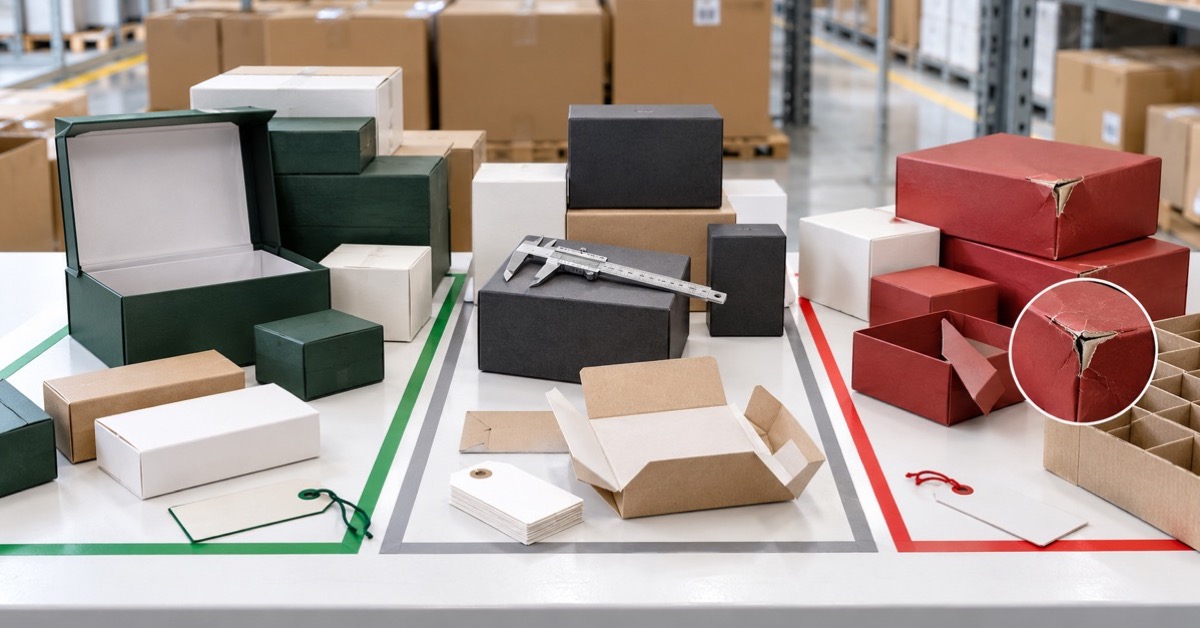
These usually feel more substantial and are often chosen for premium tea, food gifts, or holiday sets. They can support stronger shelf presence, though buyers should be careful not to assume every rigid-looking carton has the same strength. The internal construction matters, and it is not always visible in a sample photo.
Handled carry packaging
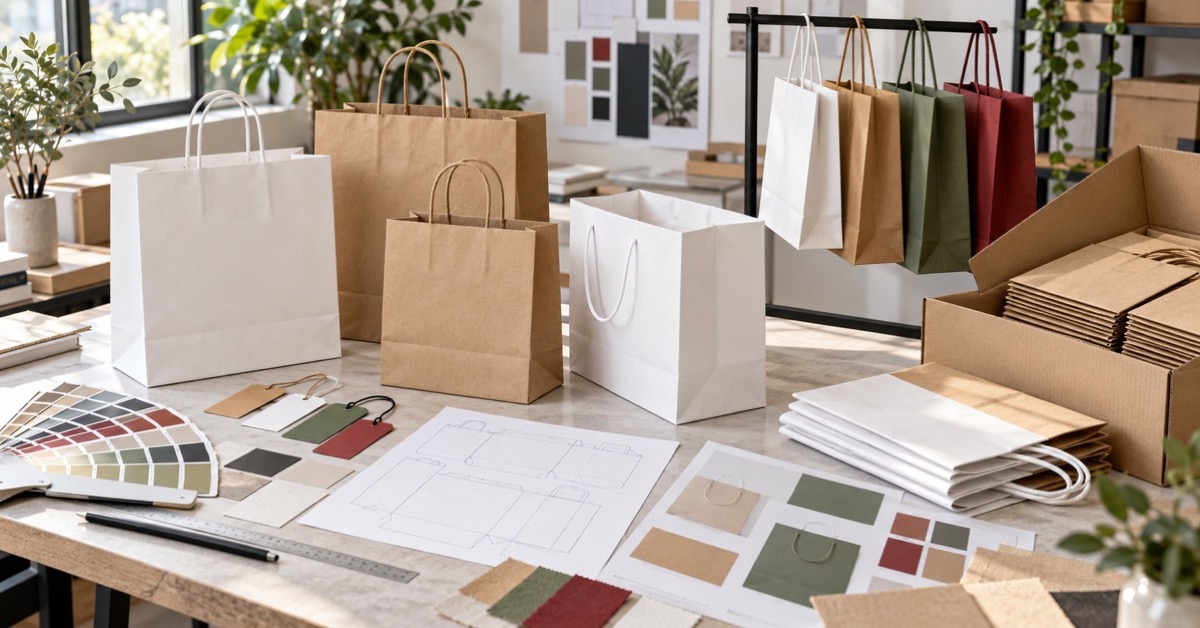
Integrated handles or rope handles make sense when the buyer wants a package that can be carried directly by the end customer. That is especially relevant for fruit gift packs, promotional bundles, and festive retail sets. A practical caution: handles should be evaluated early in the design stage, because handle attachment can affect both appearance and load behavior.
How to evaluate a custom box manufacturer before placing an order
A credible custom box manufacturer should be able to speak clearly about structure, printing, die-cutting, folding, gluing, and handle assembly. If the supplier cannot explain how the package is built, that is usually a warning sign. Buyers do not need a lecture in board chemistry, but they do need answers on fit, assembly, and branding consistency.
Ask how the artwork is applied, whether the surface is laminated or otherwise finished, and how the package will be shipped flat or pre-formed. For seasonal packaging, this is especially important because demand can spike quickly and packaging programs often need to move in coordinated batches. Orange-themed festive packaging, for example, depends heavily on color control and print consistency across the full set.
Selection criteria that actually affect performance
Start with product weight and shape, then think about retail context. A tea gift set, citrus pack, or gourmet food bundle may need a different structure than a simple takeaway container. The box should sit upright, look neat from multiple angles, and survive normal handling without collapsing at the corners.
Then consider branding. Custom packaging is doing more than containing an item; it is carrying visual identity. The orange-and-red example packaging shows how a strong color palette and cultural motif can make a set feel seasonally relevant. That kind of design can be effective, but only if the print quality is controlled and the graphics are aligned cleanly across panels.
Common mistakes buyers still make
One frequent mistake is choosing custom printed boxes based on appearance alone. The sample may look impressive, yet the structure may be awkward to assemble or inefficient to ship. Another is over-specifying the design without confirming production realities. The more unusual the shape, the more important it is to check folding logic, handle placement, and how the package will be packed for dispatch.
Buyers also sometimes overlook the difference between a retail presentation box and true transit packaging. If the product must survive logistics before it reaches the shelf, the inner and outer packs need to be designed together. Otherwise the brand pays for a beautiful box that still arrives damaged or looks tired before it is sold.
Practical advice for sourcing teams
Use samples to judge structure, not just print. Check whether the box stands well, whether the handle feels secure, and whether the opening and closing process is intuitive for store staff or end customers. If the packaging is for a citrus gift set or another seasonal food item, make sure the format fits the product’s likely selling environment: supermarket aisle, festival promotion, direct gifting, or delivery.
And do not treat “custom packaging manufacturer” as a generic search term. The best supplier for a handled gift carton is not always the best supplier for a plain folding carton. Capability matters, but so does the supplier’s experience with the exact style you need.
What to ask next
If you are comparing packaging partners, ask for structure recommendations, artwork support, and a sample showing the finished style you intend to buy. Then compare how each supplier handles materials, assembly, and presentation. That simple step usually separates a decent vendor from one that can actually support a branded packaging program.
If you are planning a retail gift pack, seasonal fruit box, or branded food package, the next move is to request a custom packaging concept that matches your product weight, display goal, and carrying needs before you lock the artwork.