

Why custom packaging matters when the product has to do more than just arrive
A custom packaging manufacturer is often brought in only after a brand has already learned the hard way that generic cartons and plain carriers are not enough. For gift items, seasonal fruit sets, boutique retail goods, and promotional kits, the package is part of the product experience. It has to carry weight, present well on a shelf, survive handling, and do some quiet selling before anyone opens it.
The examples in the supplied product information point to two common but slightly different packaging jobs: structured paper gift bags with rope handles, and printed paperboard gift boxes with festive graphics. Both are familiar in retail and gifting, but they solve different problems. A bag is meant for convenient carrying and immediate presentation. A carton or folding box gives the brand more graphic surface, more structure, and usually a stronger “gift” impression. Choosing between them is not a style decision only. It affects production method, material choice, shipping efficiency, and the way the customer perceives value.

Quick reference: what buyers are really choosing
If you are comparing a custom box manufacturer with a packaging supplier that also makes printed bags, the decision usually comes down to four questions: what is the product weight, how important is display value, how much print area do you need, and how will the package be handed to the end user?
Structured paper bags with rope handles are practical for boutique retail packaging, gift shops, souvenir sales, and promotional events. They are easy to carry and can be made in multiple sizes, which is useful when a product line includes different SKUs or mixed sets. Printed folding cartons and rigid-looking gift boxes are better when the package itself needs to feel like part of the gift, especially for fruit boxes, holiday gifting, or branded food presentation.
What the visible product styles tell us about manufacturing priorities
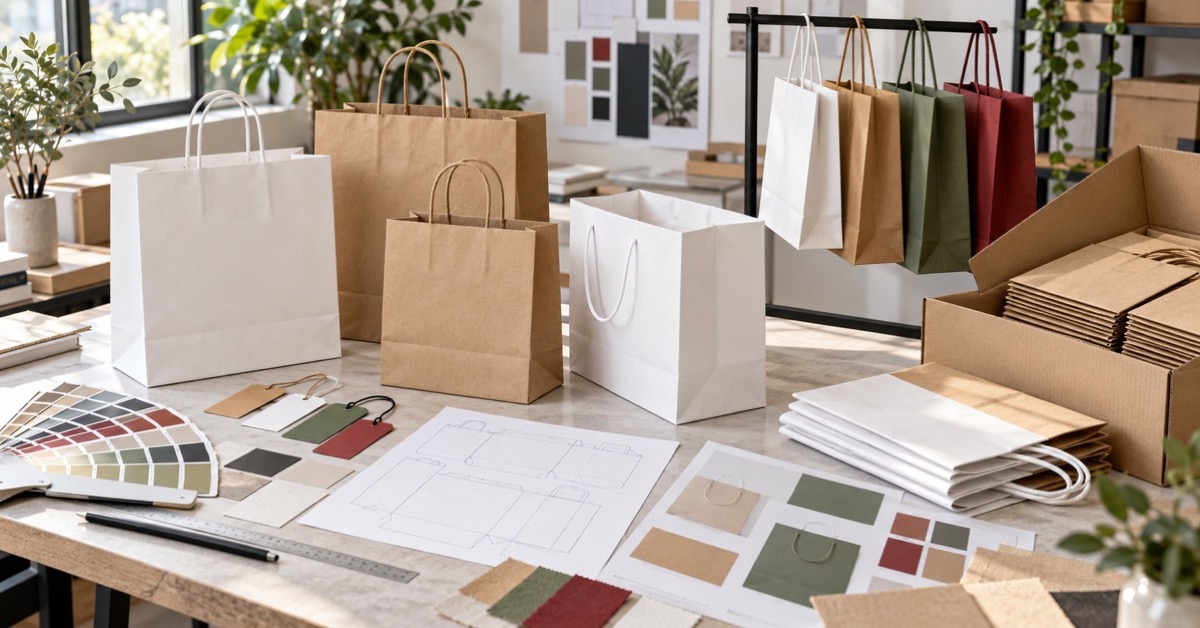
The paper bags described here have gusseted bodies, flat bases, and rope handles. That combination suggests a packaging design aimed at holding relatively rigid contents, not just soft retail items. The front faces are fully printed, which is exactly what brands want when the bag is going to sit in a shopping area or appear in customer photos. Decorative cutout-like panel patterns and alternate top shapes also indicate that the bag is being used as a branding surface, not merely as a carrier.
The printed orange-themed box follows the same logic in a more box-oriented format. The bright red field, orange illustrations, bilingual branding, and festive decorative face make it suitable for seasonal gifting and Chinese New Year-style merchandising. For buyers in food gifting or fruit retail, that matters because the package has to do two jobs at once: protect presentation and signal occasion. A plain carton can move product. A well-designed carton helps sell the occasion.
Common manufacturing approaches, without overpromising on the details
The provided information suggests commercial print production on paperboard or coated paper stock, likely with folding, die-cutting, gluing, and handle attachment for the bags. That is a reasonable assumption in this category, but it should still be treated cautiously because exact print method, board grade, lamination, and handle construction were not confirmed.
In practical sourcing terms, this means buyers should ask their custom packaging manufacturer for a sample or production spec sheet before committing to volume. A package can look sturdy in a photo and still behave differently in hand if the paper thickness, glue pattern, or handle reinforcement is not right. That is especially true for handled cartons used with fruit or gift contents. They need not only visual appeal but enough structural integrity to avoid a disappointing failure at the point of handoff.
How to choose the right packaging format for your product
Use custom packaging bags when convenience and retail carry matter
Paper gift bags with rope handles make sense when the end user will carry the package immediately. They are useful for store gifting, event giveaways, tea and snack assortments, souvenir packaging, and promotional merchandise. The visible advantage is simple: the package looks finished the moment it is handed over.
Use printed boxes when shelf presence and brand storytelling matter more
Custom printed boxes give brands more room for graphics, claims, and seasonal themes. That is why fruit brands and festive gift sellers often prefer them. The orange-themed box in the supplied data is a good example: it is not merely packaging, it is a themed presentation tool. If the product is bought as a gift, that distinction matters.
Buyer mistakes that cause packaging problems later
The first mistake is underestimating structure. Buyers often focus on artwork and forget about the way a bag or box will be handled in the real world. A beautiful package that bows, tears, or collapses is expensive in a very practical sense: it damages the brand impression and can create product loss.
The second mistake is assuming that all custom printed boxes or custom packaging options are interchangeable. They are not. A handled gift box for fruit has different demands from a cosmetic carton or a retail display box. A rope-handled paper bag has different stress points than a folding carton. Good suppliers know this, but buyers still need to be explicit about use case, fill weight, and transport conditions.
The third mistake is ordering artwork before confirming the construction. It is easier to adapt a printed layout to the correct blank size than to force a design onto the wrong format. That sounds basic, but it is where many packaging programs lose time.
Practical questions to ask a custom packaging manufacturer
Ask what materials are available, how the handles are attached, whether the package can be supplied in multiple sizes, and what print finishing options fit your brand. If you are sourcing for food or fruit gifts, also ask about any food-contact considerations relevant to your market. Do not assume those details are standard; they often are not.
It also helps to ask for pictures or samples showing the inside structure, not just the front panel. Packaging failures usually hide where the customer never looks: the base fold, the gusset, the handle joint, or the corner glue.
When the right packaging choice improves the sale, not just the shipment
For many brands, the real value of a custom box manufacturer or packaging bag supplier is not only the ability to make a container. It is the ability to make a product feel considered. A printed bag with rope handles can turn a purchase into a carry-out gift. A festive orange gift box can make seasonal fruit look like a premium present instead of a commodity. That shift in perception is often what supports higher-margin retail.
If you are planning a new packaging program, start with the product, then the handling scenario, and only then the artwork. That order saves rework. It also leads to packaging that does what it is supposed to do in the store, in transit, and in the customer’s hands.
Next step
If you are comparing options for custom packaging, prepare two things before you request quotes: a clear description of the contents and a rough idea of how the package will be used. That gives the supplier enough context to recommend the right structure, whether you need custom packaging bags for retail carry or custom printed boxes for seasonal gifting. A good first conversation is usually faster than a round of corrections later.