


A launch schedule can fail even when the factory finishes production on time. The problem often starts earlier: artwork arrives late, the sample needs another revision or the buyer assumes production begins when the first inquiry is sent. A realistic custom packaging lead time starts only after each stage has a clear approval and start condition.
Instead of asking for one total number, break the project into specification, sampling, approval, material preparation, production, inspection and delivery. This shows which dates the supplier controls and which depend on the buyer.
Build the schedule from separate production stages
| Stage | What starts it | Common source of delay |
|---|---|---|
| Specification review | Complete product and packaging requirements | Missing dimensions or uncertain materials |
| Artwork preparation | Confirmed dieline and print method | Fonts, images or mandatory text not ready |
| Sampling | Approved sample specification | Changing structure during color review |
| Production | Final approval and commercial confirmation | Late material or artwork changes |
| Inspection and shipping | Finished goods and delivery instructions | Unclear inspection criteria or booking details |
Artwork approval is a scheduling decision
A small design revision may require a new proof, plate or sample. Decide who can approve color, text, dimensions and finishes before the project begins. When several departments comment separately, the custom packaging lead time can expand without any factory delay.
Materials and finishes change preparation time
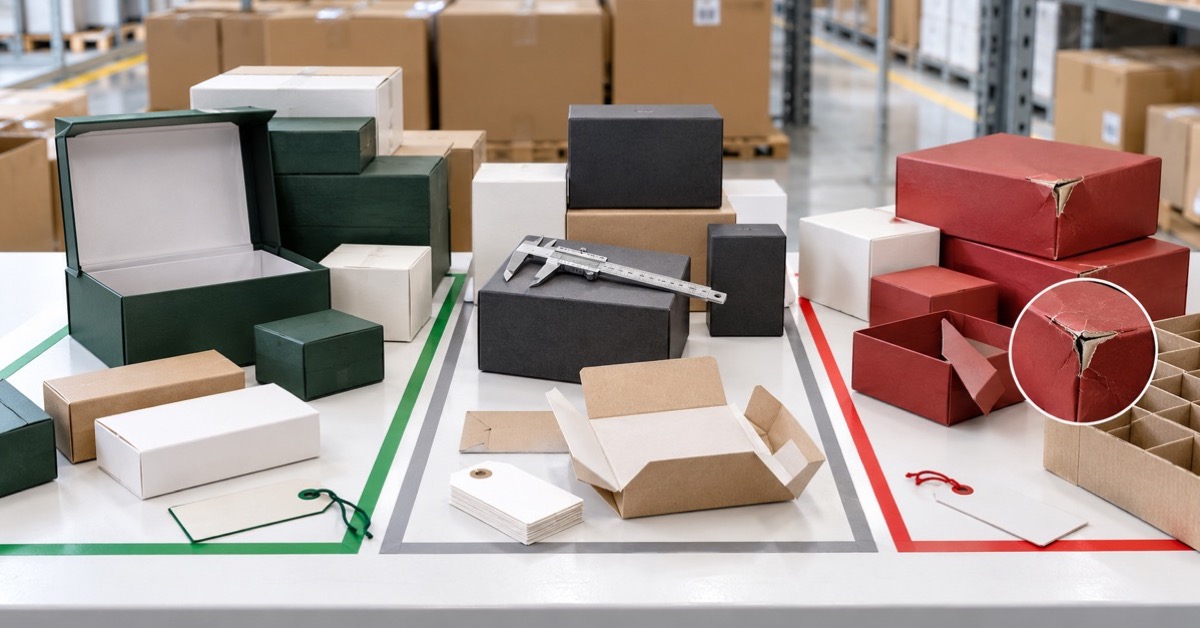
Standard materials may be easier to schedule than unusual colors, textures or accessories. Foil, embossing, coatings and manual assembly add production stages. Buyers should ask which feature is on the critical path and whether a simpler alternative would protect the launch date.
Production time and international delivery are different clocks
A factory completion date is not an arrival date. Inspection, export documents, freight booking, transport and customs clearance follow production. Importers should understand their own responsibilities; the U.S. Customs and Border Protection importer guidance is a useful starting point for shipments entering the United States.
Protect the launch with approval and delivery buffers
Work backward from the date packaging must reach the filling or assembly location, not the public launch date. Add time for receiving checks and possible corrective action. A buffer is most valuable around uncertain approvals, first production runs and seasonal freight periods.
Confirm the schedule in one shared record
- Review the PackMK OEM and ODM workflow
- Learn about PackMK manufacturing support
- Ask PackMK to review a target delivery date
Record each milestone, responsible person, approval date and change. The most reliable custom packaging lead time is a schedule built from confirmed stages, not a single estimate copied into an email.
Packaging schedule questions
When does custom packaging lead time begin?
It normally depends on final specification, artwork approval, sample approval and commercial confirmation. Ask the supplier to define the start point.
Does sampling count as production time?
Sampling is usually a separate stage before bulk production and should appear separately in the project schedule.
Can special finishes extend the schedule?
Yes. Extra materials, setup, processing and inspection may be needed for foil, embossing, coatings or manual assembly.
How can buyers reduce avoidable delays?
Prepare complete files, assign one approval owner, combine feedback and avoid changing the structure after sampling begins.