

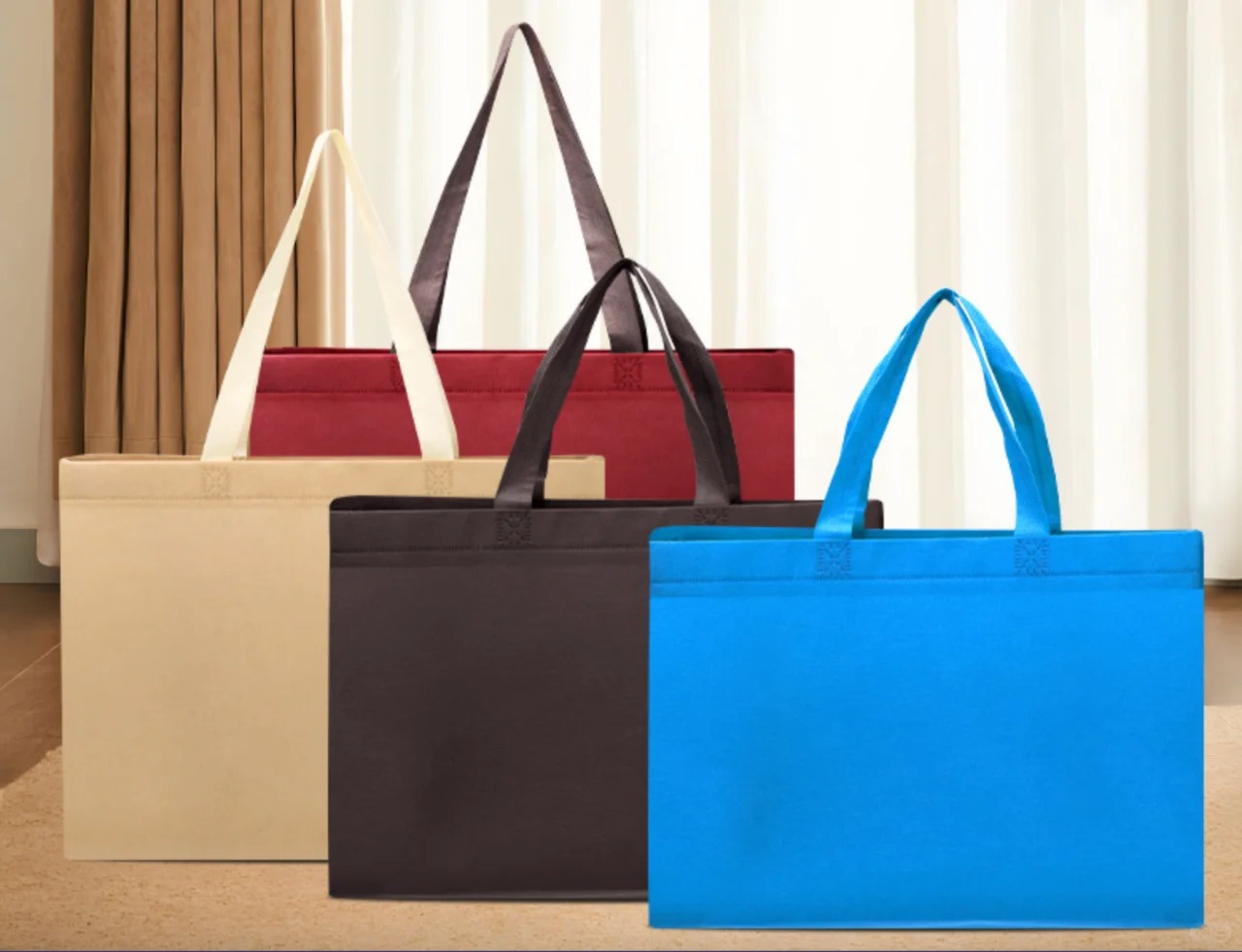
The fastest way to choose custom packaging bags is to route the project by the product's main risk. A soft garment may need clean SKU packing, a gift set may need presentation, and a heavy retail purchase may place strength above everything else. PackMK starts with that job instead of forcing every product into one familiar bag format.
This selection map connects product behavior, the customer's opening experience, packing labor, printing and logistics. It is designed for buyers who need an actionable brief before asking factories to quote.
Start at the failure you cannot accept
Name the most expensive failure first: tearing, moisture exposure, scuffing, product mixing, poor presentation, slow packing or excessive freight volume. Rank the next two risks rather than calling every feature essential. This priority order gives the supplier a reason for each material and construction choice.
PackMK records these priorities on the first page of the project brief so later cost changes do not quietly remove the feature that protects the product.
Route A: lightweight retail distribution
For events, promotions and light purchases, non-woven or light textile formats can provide useful carrying capacity with efficient production. Define the actual load, handle length, seam or welding method and expected duration of use. A generic material name does not establish performance.
Test several filled bags at the distribution point. Staff should be able to open, load and hand them over without fighting collapsed gussets or tangled handles.
Route B: premium gift presentation
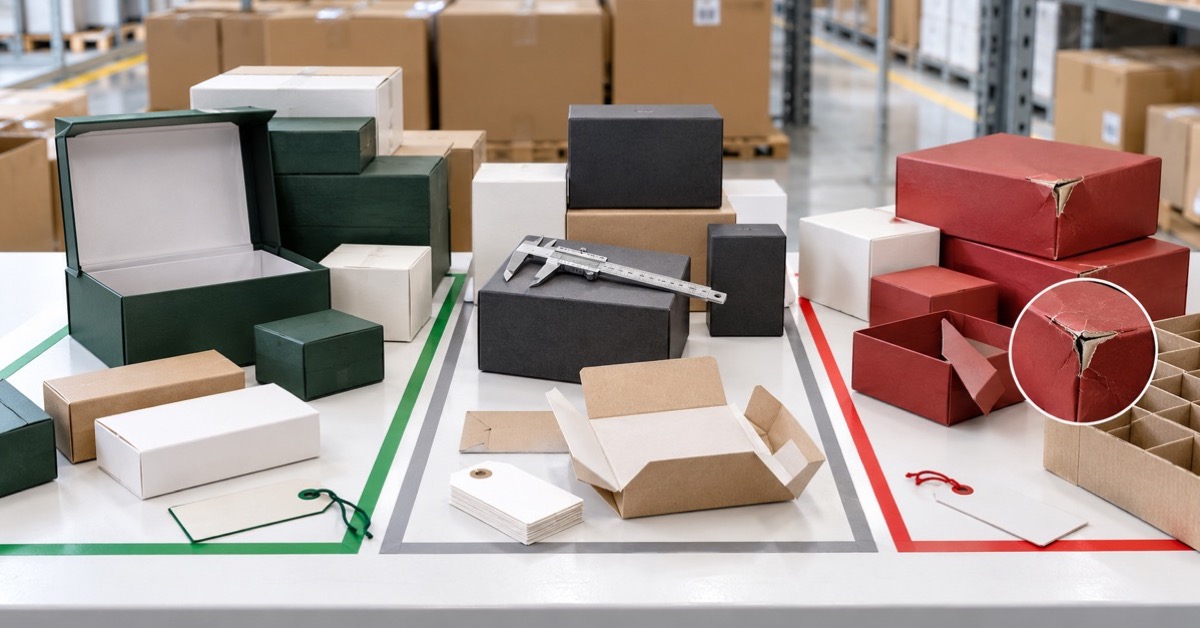
Gift packaging often depends on shape, hand feel and a controlled reveal. Paper, fabric and laminated constructions create different impressions and packing work. Measure the complete gift arrangement, including tissue, cards and protective inserts, before choosing the finished dimensions.
A premium appearance should survive carton packing. Review creases, print rubbing, handle marks and shape recovery after the sample has been packed like the production order.
Route C: clean product organization
Apparel, accessories and multi-SKU programs may need a pouch, sleeve or clear-window format that keeps items sorted. The critical specification is often not carrying strength but fast identification and repeatable closure. Create a size-to-SKU map and test the smallest and largest item assigned to each size.
If a barcode or product label is applied, check adhesion and scanning on a filled bag rather than on a flat material swatch.
Route D: protective flexible packaging
Products exposed to dust, moisture or handling may need coated fabric, PVC or another protective construction. Protection claims must be translated into specific exposure conditions and test duration. A zipper, snap or drawstring also changes the protection level.
Review whether the product can scratch the bag from inside. Corners, hardware and concentrated loads may require reinforcement or an inner wrap even when the outer material looks strong.
Route E: repeated carrying and reuse
Reusable formats need a realistic load path through the base, side seams and handles. Fabric weight alone cannot predict durability because pattern, stitch, thread, reinforcement and handle attachment work together. Run repeated carry, set-down and opening cycles with the intended contents.
The goal is a useful service life appropriate to the application, not an unsupported environmental promise. Keep the test method in the approved specification.
Compare the five routes on one page
| Route | Primary job | Typical focus | Sample test | Common oversight |
|---|---|---|---|---|
| Retail distribution | Fast handoff | Load and opening | Booth or checkout trial | Staff workflow |
| Gift presentation | Controlled reveal | Shape and finish | Packed unboxing | Carton creasing |
| Product organization | SKU control | Sizing and labels | Packing-line rehearsal | Mixed variants |
| Protection | Exposure control | Material and closure | Condition test | Internal abrasion |
| Repeated carrying | Useful reuse | Seams and handles | Loaded cycle test | Construction details |
Turn material names into measurable specifications
Record material type, weight or thickness, color reference, coating or lamination, surface finish and any sourcing requirement. For paper-based components, the FSC chain-of-custody overview explains how certified material claims depend on a controlled supply chain.
For textiles, include weave, reinforcement and acceptable shade variation. For transparent materials, approve clarity, odor and surface appearance on a finished sample.
Choose closure after observing the loading motion
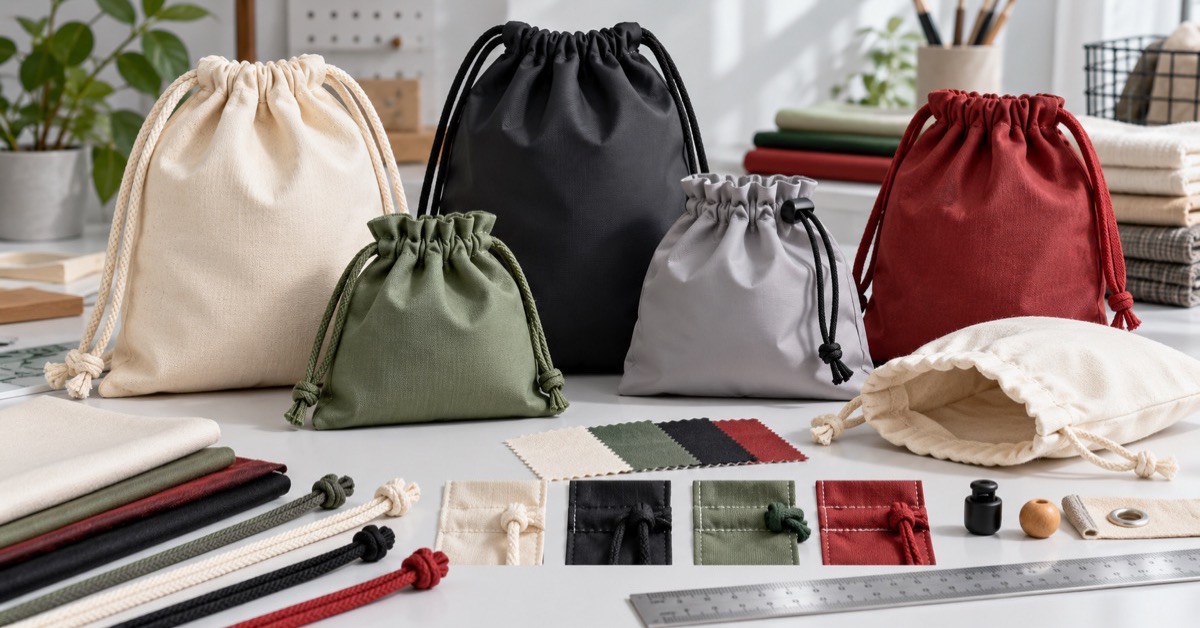
Drawstrings, zippers, snaps, adhesive strips and open-top formats each change packing speed and the user's access. Film the sample being loaded and opened if several teams must approve it. This reveals pinched products, wasted top space and closures that require two hands.
Measure closure position and usable opening, not only the outside bag dimensions. A large bag with a narrow opening can still fail the workflow.
Fit the artwork to folds and real viewing distance
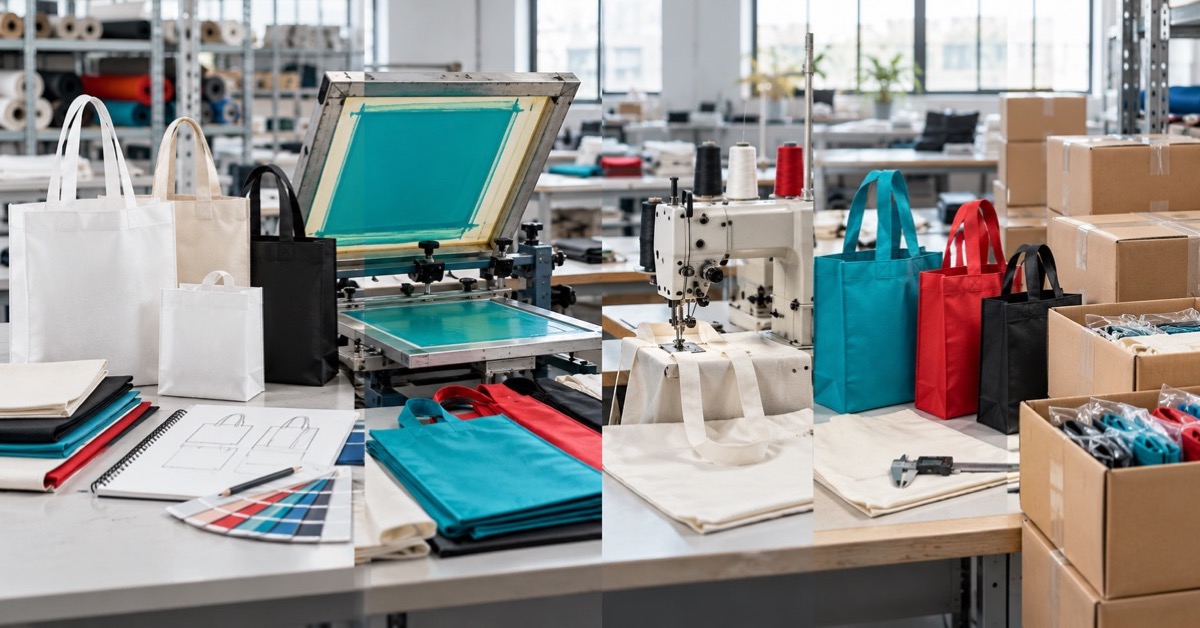
Mark seams, gussets, folds, handles and closure zones on the dieline or pattern. Place essential copy where it remains visible after filling. Fine artwork should be reviewed at production size on the chosen material because texture and base color affect detail.
Approve named spot colors or controlled references when color consistency matters. Do not rely on a screen preview as the sole production standard.
Rehearse the packing line before approving quantity
Give operators production-equivalent products, inserts, labels and cartons. Observe how long each unit takes, where bags catch, and whether finished packs stack consistently. This rehearsal often reveals a size or closure problem that a conference-room sample review misses.
Record the order of operations. A practical packing instruction reduces variation between shifts, locations and repeat orders.
Approve a sample that carries the full specification
The approved sample should identify size, material, construction, color, artwork revision, trim, closure and packing assumptions. Signatures without a version code are weak controls. Photograph critical details and retain one physical sample in a stable environment.
If production changes a material, print process or construction, request a new approval for the affected feature rather than accepting a verbal equivalence.
Inspect by risk instead of checking only appearance
Inspection should cover dimensions, material, workmanship, print, closure, load behavior, quantity and packing. The ISO quality management principles give useful process context, while the order still needs its own acceptance rules.
Sample cartons from different positions and production periods. Concentrating checks on the top layer can hide variation deeper in the shipment.
Model carton volume before freezing the bag
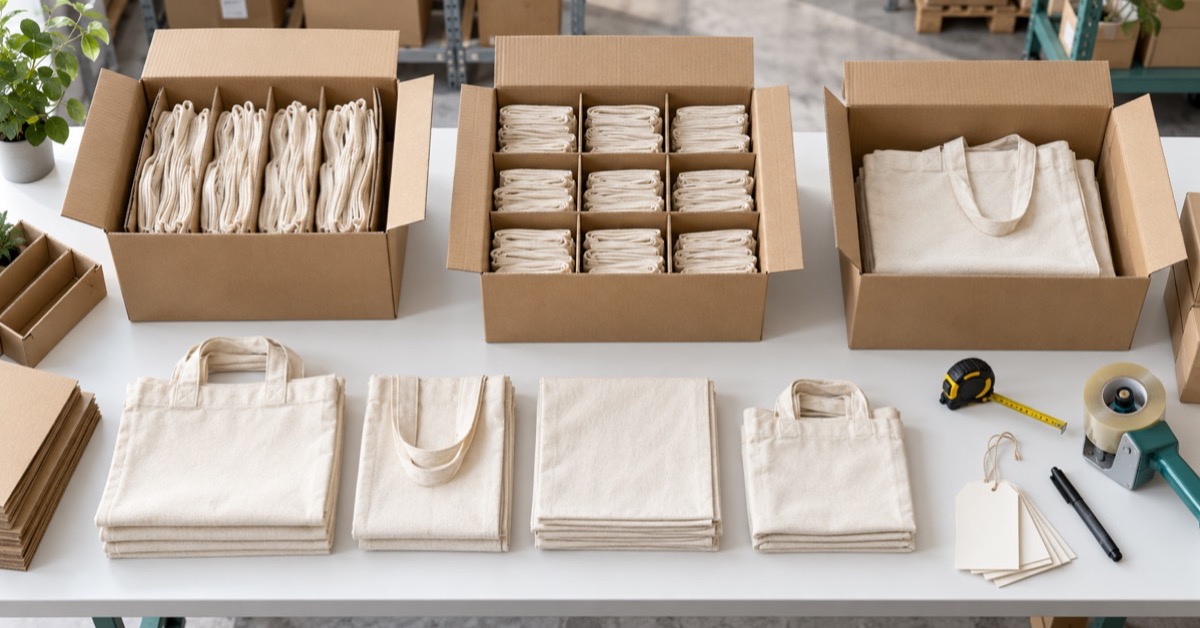
Soft bags may compress efficiently, while structured handles, thick fabric or rigid inserts create air in the carton. Request finished carton dimensions, gross weight and pieces per carton with the quotation. Compare folded and unfolded packing only after confirming that shape recovers acceptably.
Freight volume belongs in the design decision. A slightly cheaper bag can produce a higher landed cost when its packing density is poor.
Control variants with a simple identity system
Assign every size, color and artwork version a unique code. Put that code on proofs, inner packs, cartons and inspection records. If several variants share a base material, define line-clearance and segregation rules so correct printing is not mixed with the wrong bag.
Version control becomes especially important when marketing changes a message while old stock remains in warehouses.
Preserve the repeat-order baseline
Save the approved material reference, pattern or dieline, artwork, sample, test method, inspection criteria and carton plan. A repeat purchase order should cite these records and list only authorized changes. Ask whether tooling, screens or dies are retained and how long they remain usable.
This baseline helps custom packaging bags remain consistent even when staff, raw-material lots or production dates change.
Build the routing brief with PackMK
PackMK can coordinate custom packaging bags across paper, textile, non-woven and protective flexible formats. The team can translate product risks into materials, construction, artwork, samples, tests, inspection and export packing.
Send the product dimensions, weight, use route, brand files, quantity, variants, destination and target date to request a structured PackMK quotation.
Use a handoff sheet that survives team changes
| Control item | Owner | Approval evidence | Repeat-order record |
|---|---|---|---|
| Product fit | Product team | Loaded sample | Size map |
| Artwork | Brand team | Signed proof | Version file |
| Construction | Quality team | Test result | Specification |
| Packing | Operations | Line rehearsal | Work instruction |
| Shipment | Procurement | Carton data | Packing list |
Translate the selected route into supplier language
For custom packaging bags, state whether the material route uses cotton, paper, non-woven or a protective film, then record closure choice, printing method and quality inspection requirements. Show MOQ by size, color and artwork rather than as one unexplained total.
A second supplier should be able to read the same brief and quote comparable custom packaging bags without inventing missing assumptions. That is the practical test of a complete routing decision.
- Explore PackMK custom bag and packaging formats
- Review PackMK OEM and ODM development support
- Request a custom packaging bag quotation
Custom packaging bag selection questions
What details are needed to quote custom packaging bags?
Provide product dimensions and weight, the main protection or presentation goal, material preference, closure, artwork, variants, quantity, packing method, destination and required date.
Which material is best for a packaging bag?
There is no single best material. The choice depends on load, exposure, desired feel, print detail, closure, intended use, packing volume, budget and applicable market requirements.
How should a custom bag be sized?
Arrange the complete contents as they will be packed, measure the occupied space and loading path, then add only the clearance needed for closure and handling.
Should packaging bags be tested with real products?
Yes. Real contents reveal concentrated loads, sharp edges, closure interference, shape changes and handling behavior that empty samples or material swatches cannot show.
Can several SKUs share one bag size?
They can when fit, protection and presentation remain acceptable. Test the smallest and largest SKU and create an explicit size assignment instead of relying on operator judgment.
How is artwork approved on flexible bags?
Review it at production size on the selected material, mark folds and seams, confirm color references and retain a version-controlled physical or production-equivalent proof.
What quality checks matter for custom bags?
Check material, dimensions, construction, print, closures, loaded performance, variant identity, quantity, inner packing, cartons and any order-specific acceptance criteria.
How does packing affect bag cost?
Individual protection, folding method, pieces per carton, carton volume and shape recovery affect labor, materials, freight, storage and the condition in which bags arrive.
What causes repeat orders to look different?
Uncontrolled material substitution, color references, artwork revisions, construction changes, lost samples and altered packing can all create variation between production runs.
How can PackMK support a multi-format bag program?
PackMK can organize product requirements, materials, samples, approvals, inspection and packing records across formats so each bag follows a controlled project brief.