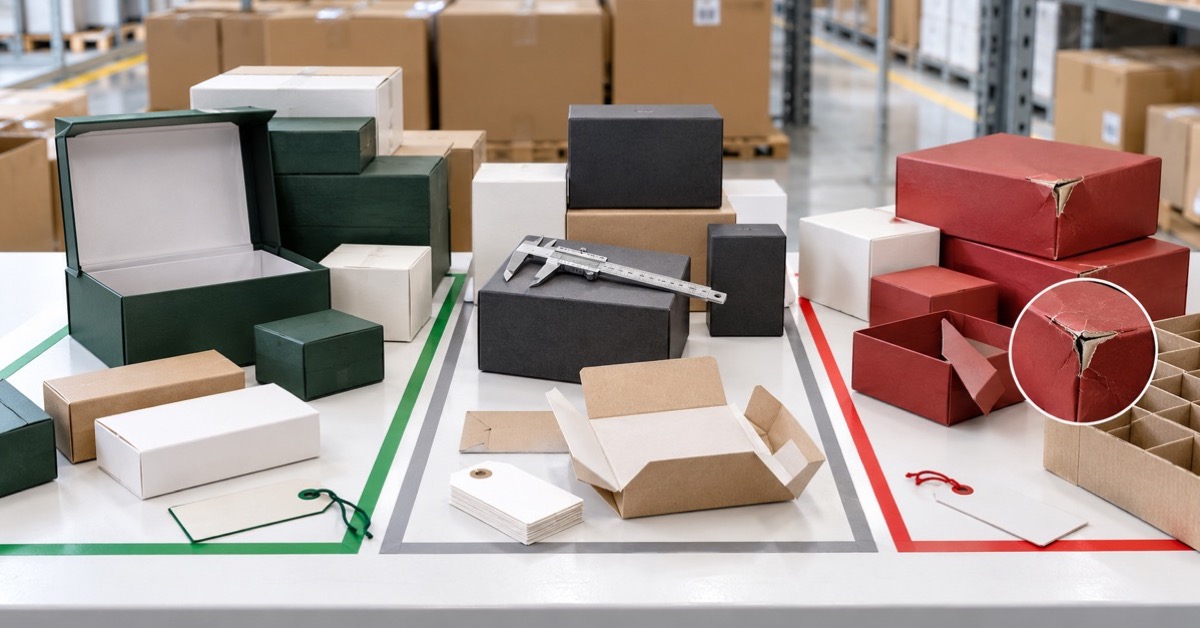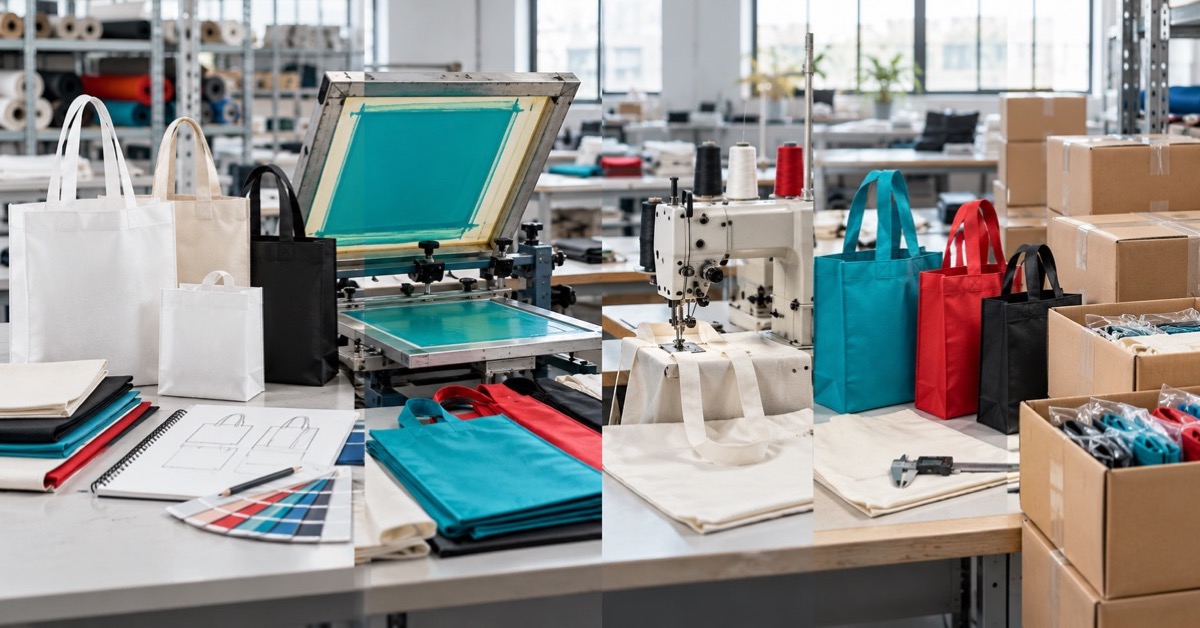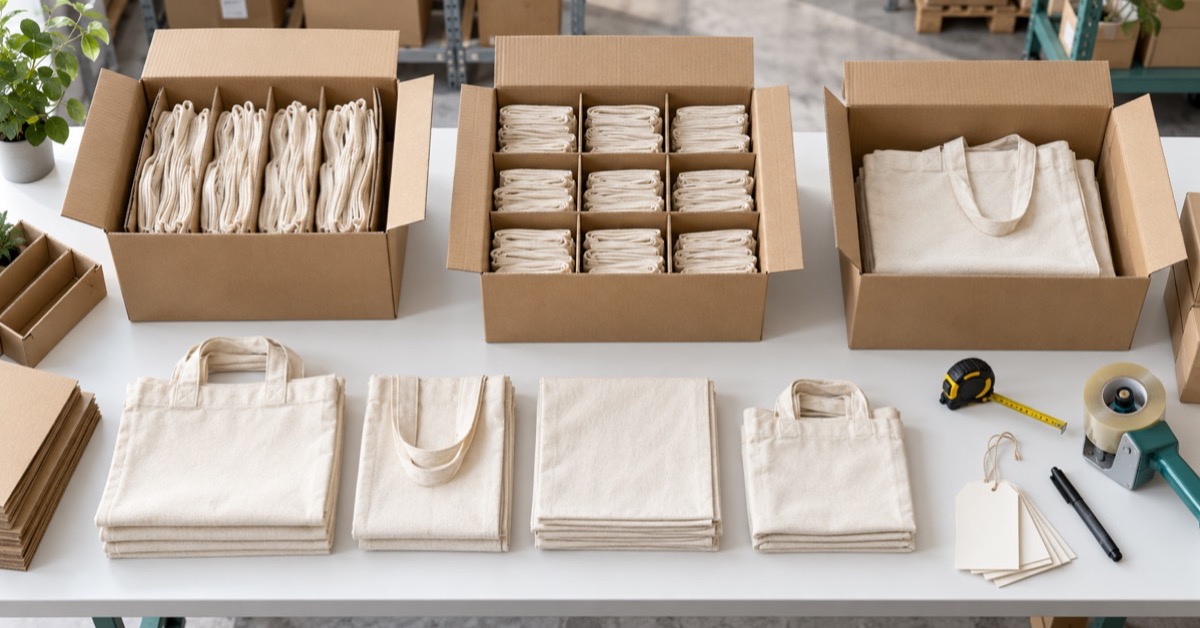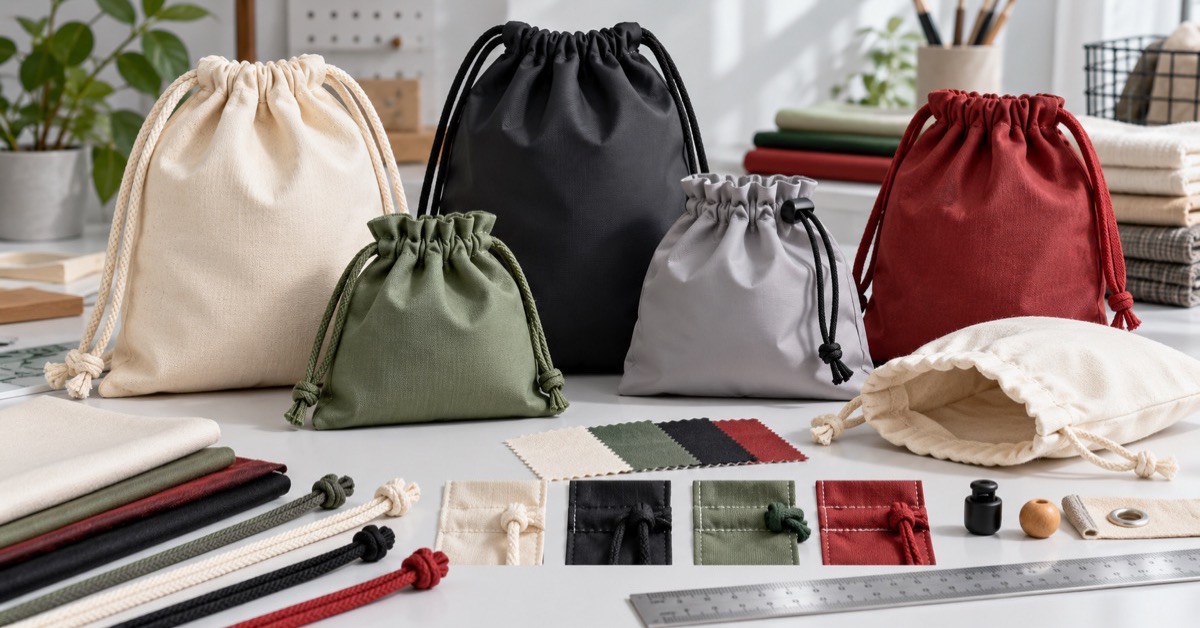


The best starting point for custom gift bags is not the bag catalog. It is the person receiving the gift, the moment of handoff and the complete set placed inside. PackMK uses that context to decide size, material, privacy, carrying comfort, artwork and packing details.
A client thank-you, employee welcome kit, retail purchase and event prize can contain similar products but require different presentation. The following scenarios show how recipient needs change the production brief.
Scenario 1: a client receives a formal thank-you
A client gift usually benefits from restrained branding, stable presentation and enough structure to protect the set during office delivery. Decide whether the bag should reveal the contents immediately or keep them discreet. Test the complete gift weight with the proposed handles.
Include the card, tissue, product boxes and any bottle or sharp corner in the size trial. The bag should stand and carry cleanly without excessive empty space.
Scenario 2: a new employee opens a welcome kit
Welcome kits often contain mixed shapes such as apparel, drinkware, notebooks and electronics. Build the arrangement first, then choose bag width, gusset and height. A size matrix may be needed when apparel varies.
Record the packing order so every employee receives the same components. A repeatable kit matters more than a decorative bag that slows assembly.
Scenario 3: a shopper carries a premium purchase
Retail gift packaging must work at the counter. Staff should be able to open, load and hand over the bag quickly while the customer holds other items. Handle drop, top reinforcement and bag opening deserve practical tests.
Artwork should remain visible when filled and carried. Avoid placing critical copy where folds, hands or tissue will hide it.
Scenario 4: an event guest receives a prize
Event distribution adds time pressure, storage limits and uncertain recipient movement. Estimate the real prize dimensions and how far recipients will carry it. Pre-opened bags may speed handoff but require more backstage space.
Label cartons by event day, booth or prize tier. A clear delivery plan keeps premium and standard gifts from being mixed during setup.
Scenario 5: a remote recipient receives a parcel
A decorative gift bag placed inside a shipping carton must survive compression and rubbing before the recipient sees it. Approve folding, surface protection and shape recovery. The shipping carton, not the bag alone, carries most transport loads.
Run a packed parcel trial with the actual gift set and inspect creases, handles, print and arrangement after delivery-equivalent handling.
Match the recipient scenario to the production brief
| Recipient | Primary need | Useful format | Key test | Main risk |
|---|---|---|---|---|
| Client | Formal presentation | Structured paper or fabric | Loaded carry | Overbranding |
| Employee | Complete kit | Reusable tote or gift bag | Packing rehearsal | Missing components |
| Shopper | Fast handoff | Handled retail bag | Counter trial | Slow loading |
| Event guest | Efficient distribution | Flat-packed bag | Setup simulation | Variant mixing |
| Remote recipient | Arrival condition | Protected inner bag | Parcel trial | Creasing |
Choose material after deciding the intended behavior
Paper can offer crisp structure and detailed printing, cotton can create a softer reusable format, and non-woven material can support efficient volume programs. Each needs a complete specification rather than a broad name.
Record material type, weight or thickness, color, coating or finish, construction and sourcing requirements. The choice should support the recipient experience and the actual load.
Use product arrangement to establish size
Place every component in the intended order, including tissue and card, and measure the occupied footprint. Add clearance for loading and closure without creating a bag that looks empty. Check tall, wide and heavy items separately.
For multiple gift versions, test the largest and smallest set. One size can simplify purchasing only when both presentations remain controlled.
Treat handles as part of the experience
Handle material, length, attachment and reinforcement affect comfort and appearance. Test hand carry and shoulder carry if both are expected. A narrow handle may look refined but become uncomfortable under a heavy gift set.
Inspect attachment points after repeated lifting and set-down cycles. The loaded sample should define acceptable performance.
Build an artwork hierarchy for the occasion
Decide which message comes first: brand, recipient name, occasion or campaign. Keep essential artwork away from folds, handles and gussets. Review size and contrast from normal carrying distance.
Personalization can sit on a card, label or tag when printing individual names on the bag would create sorting risk. Use a version code for every approved design.
Approve color and finish on the real substrate
Paper shade, fabric texture and lamination influence printed color. Foil, embossing and spot finishes add position and workmanship requirements. Approve a physical proof on the proposed material for critical results.
For paper sourcing claims, the FSC chain-of-custody overview explains why supplier scope and transaction evidence matter.
Rehearse assembly with the people doing the work
Set up the gifts, tissue, cards, labels and bags at a realistic station. Time several complete packs and watch for reversed items, crushed tissue, difficult openings and unstable finished bags. Record the preferred packing order with photos.
A packing rehearsal turns presentation into an operational process and reveals whether extra components provide enough value.
Plan delivery exceptions before production
Allow for late recipient names, changed addresses, damaged products and missing gift components. Keep a controlled reserve of generic bags and cards when appropriate. Separate bag production quantity from final recipient count if replacements are likely.
For events or multiple offices, assign carton labels to the destination and opening sequence, not only the bag name.
Inspect what the recipient will notice
Check material, dimensions, color, print, seams or glue, handles, reinforcement, cleanliness, quantity and packing. Sample multiple cartons and compare with the approved bag. The ISO quality management principles provide process context, while the order needs its own acceptance rules.
Open and load samples during inspection rather than reviewing only flat appearance.
Compare cost by experience layer
Separate base material, construction, handles, printing, finishing, personalization, individual protection, assembly support, cartons and freight volume. This shows which layer supports the recipient and which can be simplified.
Request price changes against one controlled alternative at a time. A cheaper bag with weaker handles or slower assembly may raise total project cost.
Save the recipient logic for reorders
Retain the recipient profile, gift set, size trial, material specification, artwork, approved sample, loaded test, packing instruction, inspection criteria and carton plan. A repeat purchase order should cite this baseline.
If the gift contents change, rerun fit and carrying checks even when the bag artwork stays the same.
Specify every term before requesting quotations
For custom gift bags, write the recipient profile, gift set, bag size, material choice, handle comfort requirement, artwork hierarchy, packing rehearsal, delivery plan, quality inspection and repeat order controls. State MOQ by size and artwork.
This vocabulary lets suppliers quote the same custom gift bags instead of filling gaps with different assumptions.
Develop custom gift bags with PackMK
PackMK can coordinate custom gift bags in paper, cotton, non-woven and other practical formats. Development can cover fit, printing, handles, samples, testing, inspection and export cartons.
Send PackMK the recipient, occasion, complete contents, artwork, quantity, destination and handoff date to request a project quotation.
Assign one owner to every recipient promise
| Promise | Owner | Approval evidence | Production record |
|---|---|---|---|
| Gift completeness | Project lead | Packed sample | Kit list |
| Brand message | Marketing | Physical proof | Artwork version |
| Safe carrying | Quality | Loaded test | Test method |
| Fast assembly | Operations | Line rehearsal | Work instruction |
| Correct delivery | Logistics | Carton map | Packing list |
- Explore PackMK gift bag and packaging formats
- Review PackMK custom gift packaging support
- Request a custom gift bag quotation
Custom gift bag planning questions
What information is needed to quote custom gift bags?
Provide the recipient and occasion, complete gift dimensions and weight, desired material and structure, handles, artwork, variants, quantity, packing method, destination and deadline.
How should a gift bag size be selected?
Arrange all products, tissue, cards and inserts as they will be packed, measure the occupied space and add only the clearance needed for loading and presentation.
Are paper or fabric gift bags better?
Neither is universally better. Paper can provide crisp structure, while fabric may offer softness and reuse; product load, presentation, printing, budget and logistics decide.
How should gift bag handles be tested?
Load the production-equivalent bag with the heaviest realistic gift set, carry and set it down repeatedly, then inspect comfort, attachment, reinforcement and bag shape.
Can gift bags include recipient names?
Yes, but personalization requires controlled data, proofing, sorting and replacement plans. A personalized card or tag may reduce risk while keeping the base bag standard.
What should a gift bag sample approval include?
Identify dimensions, materials, construction, handles, artwork revision, color, finishes, loaded test, packing assumptions and the exact sample that controls production.
How are gift bags inspected?
Inspect material, dimensions, construction, color, print, finishes, handles, loaded function, quantity, version separation, inner protection and cartons against approved evidence.
How should gift bags be packed for shipping?
Approve folding, handle position, surface protection, pieces per carton, carton strength and shape recovery using a representative packed transport trial.
What causes gift bag reorder differences?
Material substitution, untracked artwork, changed handles, missing color references, altered reinforcement and different carton packing can all create variation between production runs.
How does PackMK support gift bag projects?
PackMK can connect recipient requirements with materials, structures, printing, samples, loaded tests, inspection and packing so the approved presentation is repeatable.