

A conference bag is often judged in motion. It is handed over at registration, loaded with a badge, program, bottle and samples, carried through rooms, placed under a chair and taken home. Conference tote bags should be designed around that attendee journey, not only around a logo panel.
PackMK maps the bag from pre-event packing to on-site distribution and post-event reuse. The approach helps organizers balance capacity, comfort, sponsor visibility, staff speed, carton handling and future event value without claiming that one bag format fits every conference.
Direct answer: Define the attendee load and route first, then test the tote with the actual registration kit, sponsor materials, carry distance and storage conditions before approving print and event quantity.
Map the attendee journey in six handoffs
| Handoff | What changes? | Evidence |
|---|---|---|
| Arrival | How is the bag received? | Registration observation |
| Load | What enters first? | Kit fit sample |
| Carry | How far and how long? | Loaded carry trial |
| Rest | Where is it placed? | Chair or floor contact |
| Exit | Will it be reused? | Post-event review |
PackMK makes the bag a service object. A visual panel that works at a booth may fail when the attendee carries a heavy, awkward kit.
Start with the registration kit
List badge holder, lanyard, program, notebook, bottle, device, sponsor inserts, meal tokens and any fragile item. Record dimensions, quantity and the order in which staff pack them.
PackMK creates a representative loading sequence. The bag needs enough opening, base and internal room for the actual kit, not an idealized brochure set.
Separate organizer capacity from attendee comfort
A larger bag may reduce packing exceptions but increase weight, swing and shoulder strain. Compare handle length, drop, width, seam placement and loaded balance with the route attendees actually walk.
PackMK records comfort observations without turning them into universal ergonomic claims. Different audiences, climates and clothing change how a bag feels.
Prepare a route-based carry trial
Use the event's real movement pattern:
- registration queue and handoff;
- walk between session rooms;
- standing networking period;
- under-chair or floor placement;
- outdoor transfer or transit leg;
- end-of-day carry and storage.
PackMK uses the route to expose handle, base, print-rub and capacity issues before bulk packing.
Give sponsors a hierarchy instead of a collage
Define event identity, primary sponsor, supporting partners, session marks and variable information. Reserve clear zones and set a rule for logo size, contrast and distance from seams.
PackMK turns the hierarchy into a production proof. A crowded artwork can slow approval, reduce readability and create version errors across event editions.
Choose material against the event route
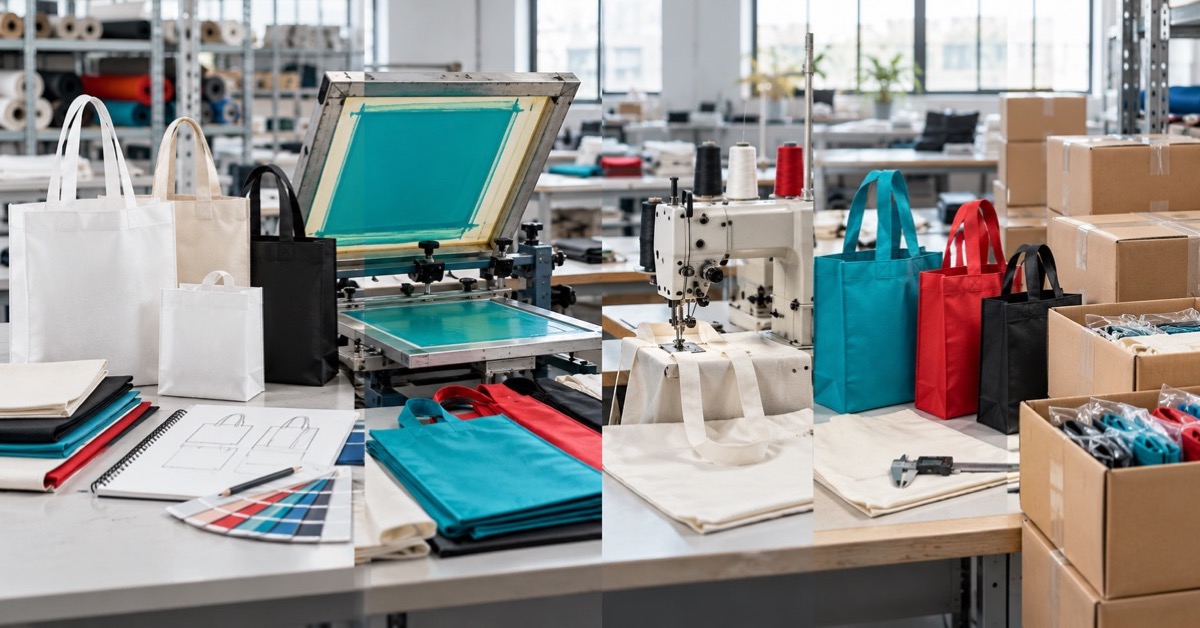
Record fabric or non-woven construction, weight, hand, opacity, print receptivity, fold behavior and expected reuse. A lightweight bag may suit a short indoor route but not a heavy sponsor kit.
PackMK samples the selected material with the loaded kit and actual print. Material names alone do not predict comfort, load behavior or the final visual surface.
Review event risk by touchpoint
| Touchpoint | Potential failure | Control |
|---|---|---|
| Queue | Slow handoff | Pre-packed assortment |
| Loading | Insert crush | Sequence trial |
| Carry | Handle discomfort | Loaded route |
| Floor | Abrasion or dirt | Contact observation |
| Sponsor view | Marks hidden | Distance review |
| Closeout | Leftover mix | Carton reconciliation |
PackMK links each concern to an owner and record, so event logistics and packaging decisions do not compete in separate spreadsheets.
Make the bottom and handle earn their space
Test loaded base, seams, gusset, handle attachment and drop length with the heaviest intended kit. Include lifting from a chair or floor, not just a hand-held hero pose.
PackMK records deformation, tipping, seam stress and grip observations. The result stays within the tested load and route rather than becoming a blanket capacity promise.
Approve print at booth and corridor distance
Review color, contrast, small sponsor marks, variable edition details and surface show-through under event lighting. Rotate and fold the bag as attendees will.
PackMK keeps a production-equivalent printed reference. A large logo can be visible at a booth yet disappear when the bag is loaded or folded.
Pack cartons for fast distribution
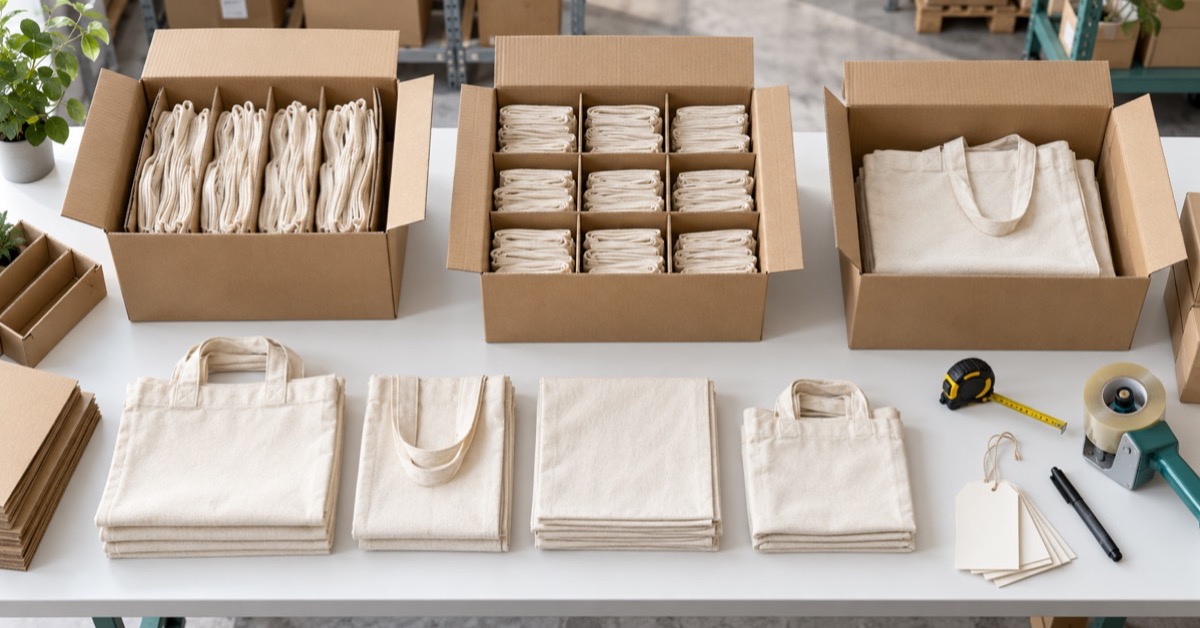
Define bundles by registration lane, attendee type, sponsor tier or language. Mark purchase order, event edition, bag SKU, artwork version, count and handling needs on cartons.
PackMK reconciles packed bundles and remaining stock. Staff should not discover mixed editions at the registration desk.
Design for the day after the event
Ask whether attendees will reuse the bag for work, shopping, travel or storage. Durability, neutral styling and useful dimensions may extend value beyond one logo impression.
PackMK records the reuse intention but does not promise a service life without a defined test. A reusable concept still needs a construction, route and care boundary.
Use attendance forecast as a packaging allocation
Separate registered, staff, speakers, exhibitors, press and contingency quantities. Model edition, language, sponsor and late-registration splits before committing to cartons.
PackMK connects forecast assumptions to purchase-order versions. A lower unit price can be offset by unusable leftover editions.
Reopen conference tote bags when the event changes
New venue route, kit, sponsor hierarchy, climate, audience, material or edition can change the bag decision. Name the touchpoints that need a new trial.
PackMK preserves stable artwork and construction evidence while reopening affected handoffs. That makes recurring conferences easier to manage.
Journey example: a three-day technology conference
An organizer expects attendees to collect a badge, notebook, bottle, sponsor samples and a small device pouch. The venue connects two halls and includes an outdoor evening transfer.
PackMK would load the complete kit, time the registration handoff and run a route carry trial across indoor and outdoor segments. A heavier cotton option and a lighter non-woven option could be compared against comfort and reuse goals.
Sponsor marks would be placed by hierarchy, with the main event identity kept readable when the bag is folded or loaded. Staff bundles would separate speaker and exhibitor kits from attendee kits.
Carton labels would identify edition and lane allocation. Closeout data would record leftover quantities by edition and whether attendees reused the bag after the event.
A future venue change would reopen route and load evidence without forcing a new logo hierarchy if the event identity remains stable.
Use quality and event-marketing principles as context
Quality and marketing resources can help organizers define ownership and truthful event claims, while physical bag decisions remain order-specific. Review ISO quality management principles and FTC advertising and marketing guidance as general context. PackMK still releases an order against the buyer brief, approved samples, production evidence and destination-specific decisions.
Turn the attendee journey into a conference tote bags brief
A decision-ready conference tote bags brief should define registration flow, badge and insert fit, carry comfort, sponsor hierarchy, event route, load profile, print placement, staff distribution, post-event reuse, reorder record. It should also identify PackMK, conference tote bags, attendee, organizer, cotton, non-woven, OEM, MOQ. PackMK turns these fields into a quotation basis, approval route and evidence list that purchasing, quality, operations and receiving teams can interpret consistently.
Ask the supplier to state assumptions, exclusions, approved alternatives, tooling, minimums, inspection scope, packing and lead-time conditions. For conference tote bags, each broad promise should become a physical sample question, measurable tolerance, priced option or release gate before the purchase order is confirmed.
Bag performance varies with material, construction, load, handle, route, climate, print, packing and attendee behavior. Reuse or environmental claims require defined evidence and appropriate review.
Effective conference tote bags carry the event experience through every handoff. PackMK makes capacity, comfort, branding, distribution and post-event value measurable.
Before approval, PackMK recommends a one-page decision record naming the selected route, rejected alternatives, evidence reviewed, open limitations, quantity basis, owner and review date. After delivery, add receiving observations, defects, user feedback, supplier response and retained references so the next order can reopen only changed decisions.
Plan conference tote bags with PackMK
PackMK can support conference tote bags from buyer brief and physical samples through production checks and export packing. Send the product or application, artwork, quantities, variants, destination and required date to request a structured quotation for conference tote bags.
- Explore PackMK custom tote bags
- Review PackMK OEM and ODM support
- Request a conference tote bag program quotation
Conference tote bags questions
What should a conference bag hold?
List the actual badge, program, bottle, samples, devices and inserts, then test the loading sequence.
How is carry comfort evaluated?
Use a loaded route trial with representative handles, drop, distance and placement behavior.
How should sponsor logos be arranged?
Create a hierarchy with reserved zones, readable size and version ownership instead of an unstructured collage.
Should cotton or non-woven be used?
Compare the tested load, route, hand feel, print, reuse intent and quantity basis for the specific event.
How many bags should be ordered?
Allocate registered attendees, staff, speakers, exhibitors, languages, editions and contingency separately.
Can one design serve multiple events?
Often, if structure and identity remain stable; venue, kit or sponsor changes may reopen affected tests.
What belongs on cartons?
Mark event edition, bag SKU, artwork version, bundle purpose, count and lane or audience allocation.
How should leftover bags be managed?
Track leftovers by edition and variant, then decide whether they can be reused without confusing identities.
Does PackMK guarantee a bag's service life?
No. PackMK can support defined tests, but reuse claims require a stated construction and evidence boundary.
How does PackMK support event programs?
PackMK connects kit mapping, samples, print approval, distribution packing, inspection and reorder records.