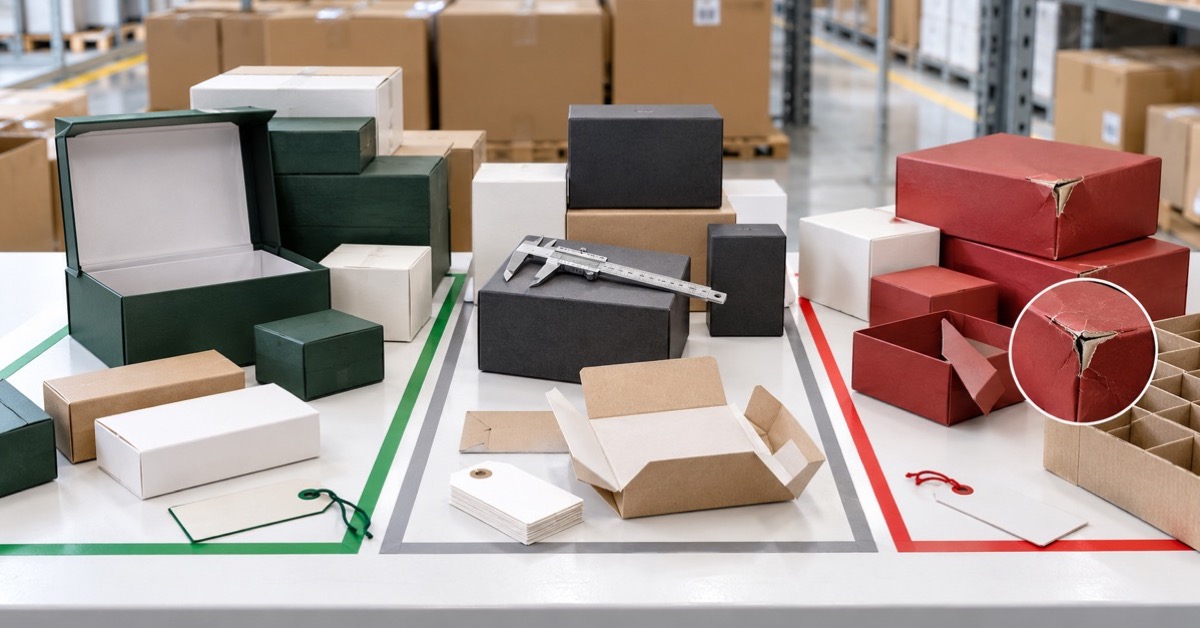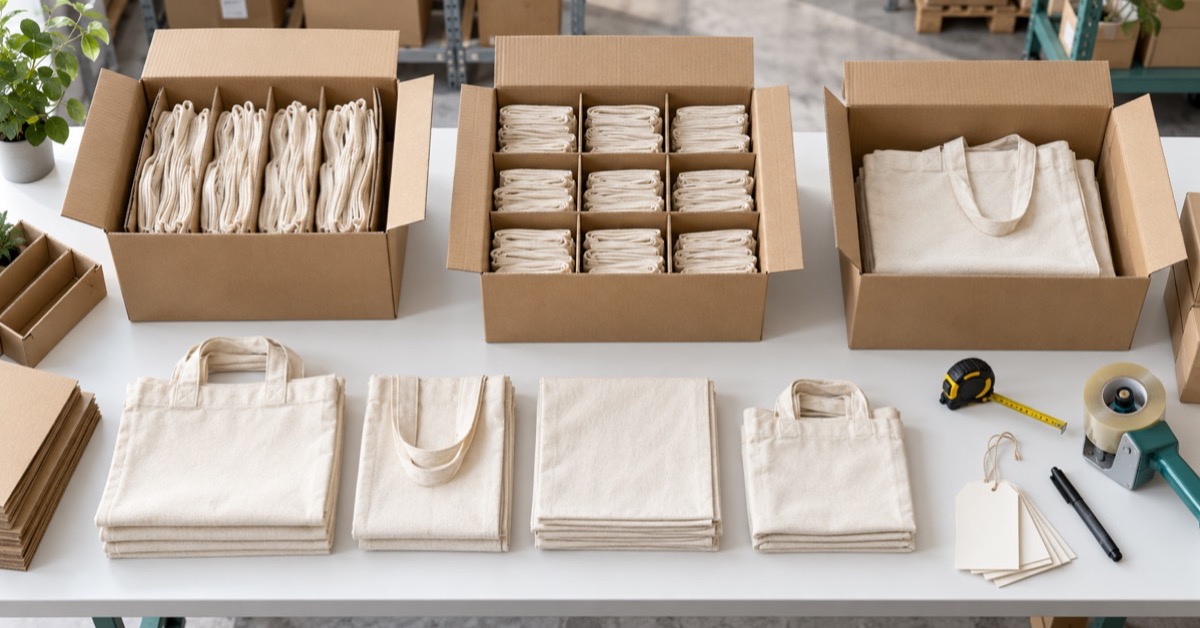


A box can pass production inspection and still fail the buyer if cartons arrive crushed, versions are mixed or counts are difficult to reconcile. Bulk paper boxes should therefore be released from the receiving condition backward, with product, box and master-carton evidence connected.
PackMK builds a control plan that begins with structural assignment and ends with warehouse feedback. This prevents the final carton from being treated as a minor packing detail.
PackMK starts with the buyer's operating question and records the active brief, decision owner, physical reference and unresolved risks before volume production.
Receiving control 1: define the box assignment
State whether the box is retail, presentation, storage or a secondary layer and what protection remains outside it. PackMK works backward from the warehouse receiving condition. Box quality, version identity, count and master-carton protection must arrive together.
Record product weight, orientation, opening frequency and handling boundaries. This prevents a display box being expected to act as a shipper. Keep the evidence beside the live specification so quoting, sampling, production, inspection and repeat orders use the same basis.
Receiving control 2: approve product fit
Measure products, accessories, tolerances and vulnerable surfaces before freezing structure. PackMK works backward from the warehouse receiving condition. Box quality, version identity, count and master-carton protection must arrive together.
Load range extremes and inspect movement, removal and presentation. This prevents a structure being designed around one ideal unit. Keep the evidence beside the live specification so quoting, sampling, production, inspection and repeat orders use the same basis.
Receiving control 3: freeze the architecture
Set folding carton, lid-and-base, drawer, book style or other construction with dimensions and assembly. PackMK works backward from the warehouse receiving condition. Box quality, version identity, count and master-carton protection must arrive together.
Approve a physical blank and note cost, cube and pack-time tradeoffs. This prevents a rendering replacing structural proof. Keep the evidence beside the live specification so quoting, sampling, production, inspection and repeat orders use the same basis.
Receiving control 4: qualify paperboard
Name grade, thickness, stiffness, grain, wrap, liner, color and substitutions. PackMK works backward from the warehouse receiving condition. Box quality, version identity, count and master-carton protection must arrive together.
Check formed samples after creasing, folding, wrapping and conditioning. This prevents premium wording replacing a material specification. Keep the evidence beside the live specification so quoting, sampling, production, inspection and repeat orders use the same basis.
Receiving control 5: control creases and cuts
Set tooling revision, cut tolerance, crease depth, grain and acceptable cracking. PackMK works backward from the warehouse receiving condition. Box quality, version identity, count and master-carton protection must arrive together.
Fold first pieces and samples across the run under the same method. This prevents flat blanks passing while boxes crack. Keep the evidence beside the live specification so quoting, sampling, production, inspection and repeat orders use the same basis.
Receiving control 6: release artwork versions
Link every language, SKU and market file to the correct dieline and box code. PackMK works backward from the warehouse receiving condition. Box quality, version identity, count and master-carton protection must arrive together.
Use coded physical proofs and remove obsolete files from production circulation. This prevents the right design reaching the wrong box. Keep the evidence beside the live specification so quoting, sampling, production, inspection and repeat orders use the same basis.
Receiving control 7: prove surface finishes
Define color, lamination, foil, embossing, varnish and registration limits. PackMK works backward from the warehouse receiving condition. Box quality, version identity, count and master-carton protection must arrive together.
Rub, flex, stack and view formed boxes under defined light. This prevents digital proofs hiding scuffing or edge failure. Keep the evidence beside the live specification so quoting, sampling, production, inspection and repeat orders use the same basis.
Receiving control 8: standardize assembly
Set glue, tape, magnets, folding sequence, cure, cleaning and operator references. PackMK works backward from the warehouse receiving condition. Box quality, version identity, count and master-carton protection must arrive together.
Time a short run and compare output from multiple operators. This prevents quality depending on one experienced worker. Keep the evidence beside the live specification so quoting, sampling, production, inspection and repeat orders use the same basis.
Receiving control 9: approve the first article
Compare initial production with structure, board, artwork, finish, function and packing references. PackMK works backward from the warehouse receiving condition. Box quality, version identity, count and master-carton protection must arrive together.
Stop critical mismatches before volume continues. This prevents development quality failing on the live line. Keep the evidence beside the live specification so quoting, sampling, production, inspection and repeat orders use the same basis.
Receiving control 10: sample production over time
Check beginning, middle and end output across shifts, colors and versions. PackMK works backward from the warehouse receiving condition. Box quality, version identity, count and master-carton protection must arrive together.
Use named defects for structure, appearance, function, identity and cleanliness. This prevents good early boxes hiding later drift. Keep the evidence beside the live specification so quoting, sampling, production, inspection and repeat orders use the same basis.
Receiving control 11: define inner protection
Set tissue, film, dividers, interleaving, orientation and units per bundle. PackMK works backward from the warehouse receiving condition. Box quality, version identity, count and master-carton protection must arrive together.
Pack and unpack production samples and inspect rubbing, dents and contamination. This prevents box-to-box contact damaging finishes. Keep the evidence beside the live specification so quoting, sampling, production, inspection and repeat orders use the same basis.
Receiving control 12: qualify the master carton
Specify count, strength, dimensions, moisture protection, marks and pallet arrangement. PackMK works backward from the warehouse receiving condition. Box quality, version identity, count and master-carton protection must arrive together.
Run handling, stacking and receiving rehearsals with the actual configuration. This prevents strong boxes being underprotected outside. Keep the evidence beside the live specification so quoting, sampling, production, inspection and repeat orders use the same basis.
Receiving control 13: reconcile versions and counts
Connect production totals, bundle counts, carton labels and packing lists by SKU. PackMK works backward from the warehouse receiving condition. Box quality, version identity, count and master-carton protection must arrive together.
Open cartons from different packing periods and perform a blind count. This prevents a correct total hiding shortages or mixes. Keep the evidence beside the live specification so quoting, sampling, production, inspection and repeat orders use the same basis.
Receiving control 14: close warehouse feedback
Check carton condition, box appearance, version, count and packability after delivery. PackMK works backward from the warehouse receiving condition. Box quality, version identity, count and master-carton protection must arrive together.
Link findings to production and packing records before the next order. This prevents receiving problems being lost after claim closure. Keep the evidence beside the live specification so quoting, sampling, production, inspection and repeat orders use the same basis.
Work backward from the receiving dock
| Receiving need | Upstream control | Proof |
|---|---|---|
| No crushing | Structure and carton | Stack trial |
| No scuffing | Finish and interleave | Packed sample |
| Correct version | Artwork and marks | Trace test |
| Correct count | Bundle and carton | Blind count |
| Fast use | Assembly and packing | Line rehearsal |
Separate box and master-carton defects
| Observation | Likely level | Next evidence |
|---|---|---|
| Crease crack | Box process | First article |
| Rub marks | Inner packing | Interleave trial |
| Corner crush | Master carton | Handling trial |
| Mixed SKU | Identity control | Carton trace |
| Short count | Packing reconciliation | Count record |
Use paper and quality references as boundaries
Responsible sourcing and quality principles guide the control plan, while production-equivalent boxes and cartons decide order acceptance. Review FSC responsible forestry information and ISO quality management principles as context. Acceptance still depends on the real product, signed sample, production route and documented conditions in the PackMK brief.
Control bulk paper boxes through receiving evidence
For bulk paper boxes, record box structure, paperboard, dieline, crease, artwork version, surface finish, assembly, first article, master carton, receiving inspection. The controlled file also identifies PackMK, paper box, paperboard, folding carton, rigid box, FSC, MOQ, carton. This language turns a search phrase into fields a supplier can quote and an inspector can verify.
Require quotations to show assumptions and exclusions. A tolerance, substitution, minimum, lead-time condition or omitted service should become a sample question, price option or release condition rather than remain an informal promise.
Check whether evidence represents the intended quantity, variant mix and delivery route. A small sample may answer fit or appearance, but it cannot automatically prove run consistency, carton protection or receiving speed. Assign the correct later check to every open risk.
After receiving the first shipment, compare results with the approved sample and inspection record. Record what predicted the outcome, what surprised the team and which field needs revision. PackMK places that learning into the next brief instead of leaving it in disconnected messages.
This buyer-question method keeps bulk paper boxes useful across sourcing, quality, sales and operations. Each major decision has an owner, evidence, a visible tradeoff and a recovery path when material, artwork, quantity or timing changes.
Produce bulk paper boxes with PackMK
PackMK can develop bulk paper boxes from brief and samples through production checks and export packing. Send PackMK the product, intended use, artwork, quantity, variants, destination and required date to request a structured quotation for bulk paper boxes.
Bulk paper box control questions
What is needed to quote bulk paper boxes?
Provide product dimensions, box format, board, artwork, finishes, quantity by version, inner protection, cartons and destination.
Why begin with the receiving condition?
It reveals whether structure, finish, version control, counts and master-carton protection work together after transport.
When should the dieline be frozen?
After product fit, architecture and physical blank approval, before final artwork and tooling release.
How is paperboard approved?
Specify grade, thickness, stiffness, grain, wrap and color, then assess it after forming and conditioning.
What does a first article prove?
It proves transfer from approved structure, material, artwork, finish and packing references to production.
How are finishes protected in bulk?
Use suitable curing, interleaving, orientation, bundle pressure and master-carton protection validated with packed trials.
How are SKU mixes prevented?
Use coded files, box identifiers, bundle labels, carton marks, packing lists and reconciliation.
What belongs in final inspection?
Structure, board, dimensions, artwork, finish, assembly, function, cleanliness, version, quantity and packing.
What should warehouse receiving check?
Carton condition, marks, version, count, box appearance, damage pattern and usability for the next operation.
How does PackMK support bulk paper boxes?
PackMK coordinates structure, proofs, first articles, run checks, master cartons, export packing and receiving records.