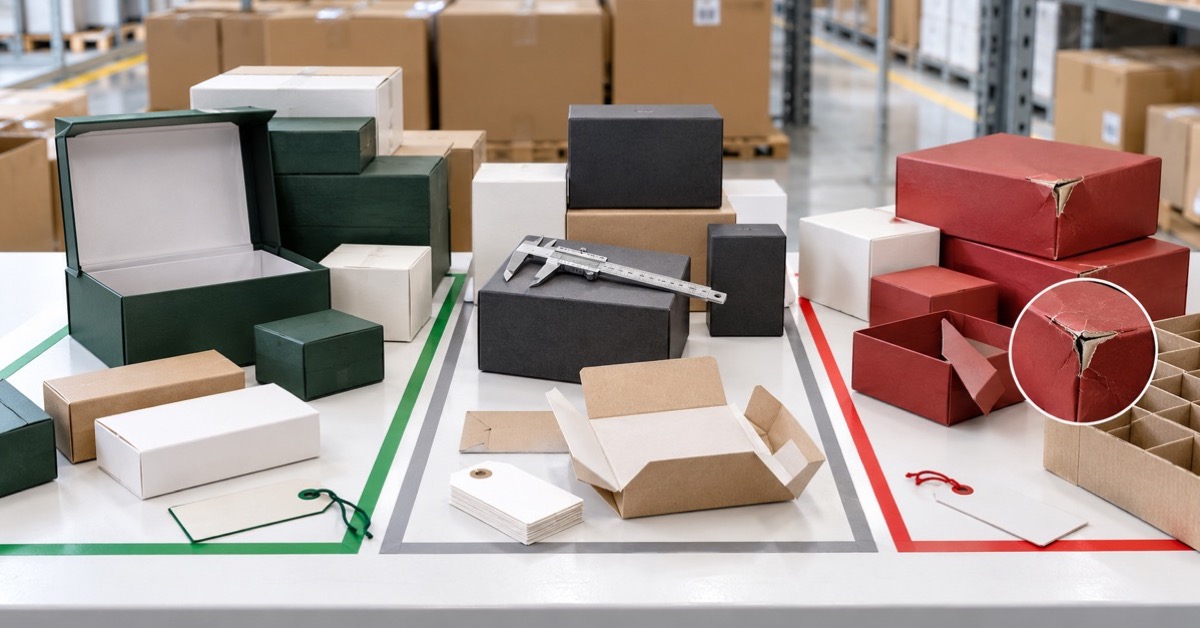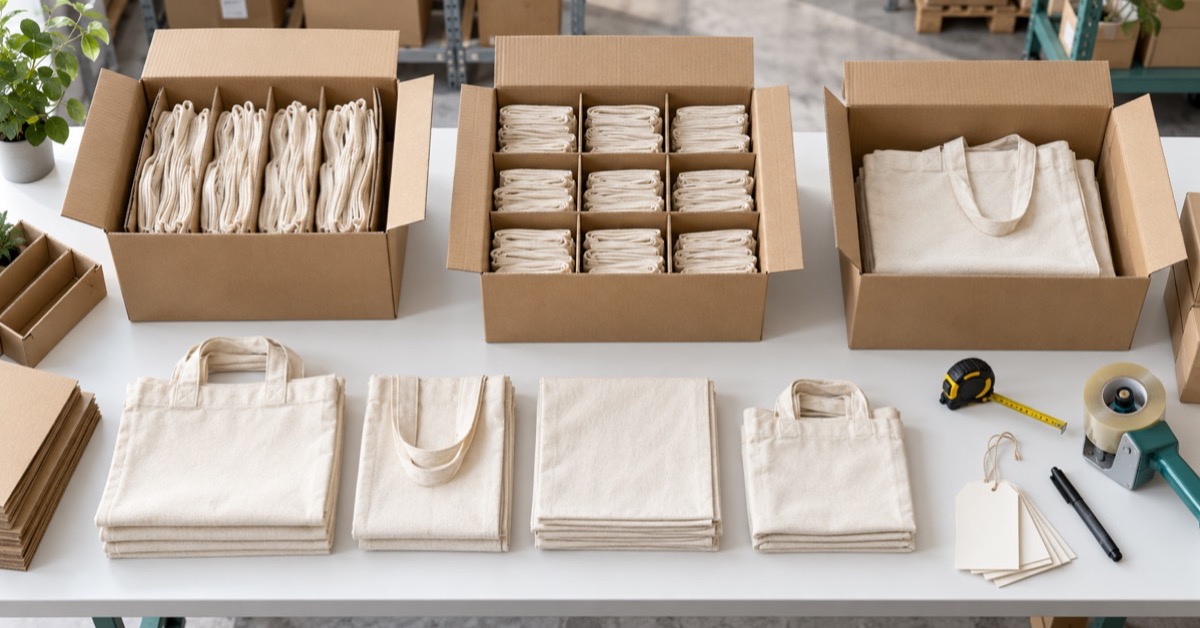


A bulk box order is often approved from a flat dieline and a unit price. The real cost appears later: wasted void, crushed corners, slow packing, oversized cartons or a product that shifts during delivery. Bulk packaging boxes should therefore be planned as a pack-out system, not just a printed shell.
PackMK uses a cartonization worksheet to connect the product, box structure, insert, inner pack and master carton. This lets a buyer see where a design saves space and where a cheaper board or loose fit creates downstream work.
Direct answer: Calculate bulk packaging boxes from the filled product, pack-out pattern and master-carton route, then validate structure, protection, print and receiving evidence on production-equivalent samples.
Write the pack-out question before choosing a box
State what the box contains, how it is placed, whether it needs an insert, how the consumer opens it and which side faces up during storage. Include product variation, accessory count and any fragile or sharp features.
A box that fits one hero product may fail when the assortment changes. PackMK records minimum, typical and maximum contents before finalizing the internal dimensions.
A cartonization worksheet for the first quote
| Field | Record | Why it matters |
|---|---|---|
| Product | L × W × H and weight | Sets internal fit |
| Pack-out | Units per inner pack | Controls labor |
| Master carton | Rows, columns, layers | Controls cube |
| Protection | Insert, wrap, clearance | Controls damage |
| Handling | Stacking and route | Controls compression |
Use the same worksheet for every supplier so a low quote does not win by excluding the difficult parts of pack-out.
Capture the dimensions people usually forget
Add these fields to the drawing or brief:
- product tolerance and bulges;
- closure clearance and finger access;
- insert thickness and compression;
- folding direction and glue flap;
- label or barcode quiet zones;
- inner-pack and master-carton orientation;
- pallet or parcel constraints.
The forgotten millimeters often become the reason a line slows down or an outer carton must be repacked.
Choose board by load path, not by name
Kraft, coated paperboard, corrugated constructions and specialty boards can each be appropriate, but the choice depends on span, stacking, humidity, print route, finish and handling.
PackMK asks where the load travels through the box. A heavier board does not automatically solve a weak corner, poor score, incorrect grain direction or unsupported top panel.
Compare structural routes with a filled sample
Locking tabs, crash-lock bottoms, sleeves, rigid set-ups and mailer-style constructions create different assembly and protection profiles. Compare them with the real product and intended packing speed.
A flat sample can hide interference between insert and product. PackMK checks opening, closing, collapse, recovery, print alignment and the time needed for a trained operator to pack one unit.
Separate unit price from total packaging cost
| Cost line | Normalize | Typical hidden scope |
|---|---|---|
| Box | Board, size, print | Substitution or setup |
| Insert | Material and tooling | Assembly |
| Packing | Units per inner | Labor |
| Master carton | Cube and marks | Protection |
| Delivery | Volume and route | Repack risk |
A useful comparison shows which cost moves when the box size, insert or carton pattern changes.
Design the inner pack and master carton together
Set units per inner, separators, tissue, poly protection, carton marks and orientation. Then calculate how the inner packs form the master carton and whether the result fits the planned handling route.
PackMK checks whether a visually elegant inner pack creates an inefficient outer cube. If the buyer ships mixed SKUs, the carton identity must also prevent picking errors.
Treat print and finishing as structural variables
Coverage, ink, coating, foil, embossing and lamination can affect scoring, folding, friction and surface durability. A premium finish should be checked after the box is formed, not only on a flat sheet.
Keep critical artwork away from folds, glue areas, barcode quiet zones and handling contact. PackMK uses a folded proof to expose misalignment before tooling or bulk printing.
Run a protection check that matches the route
Identify the actual risks: drop, compression, vibration, moisture, parcel sorting, retail stacking or repeated handling. The correct check depends on the route and the product, not on a generic claim of strength.
Document the sample condition, load, orientation and acceptance criteria. PackMK keeps limitations beside the test so the result is not reused for a different product or carton pattern.
Use a small pilot to test labor and cube
A pilot pack-out can reveal that an insert twists, a tab tears, a label is hidden or the carton takes too long to close. Record time per unit, operator notes, rejected units and any corrective action.
The pilot also confirms the master-carton count and receiving labels. This is often cheaper than discovering a poor pack-out after thousands of printed boxes arrive.
Set inspection around function and identity
Check board, dimensions, score, glue, print, color, finish, inserts, quantity, carton marks and version identity. Use a first-article sample and defined in-process checks for critical features.
PackMK recommends inspecting both empty and filled boxes. The finished product can expose bowing, interference or an opening force that a flat inspection misses.
Plan reorders around what can drift
Record board reference, structure drawing, die ownership, color proof, finish, insert, pack-out, carton pattern and approved deviations. State which changes require a new sample or tooling review.
A reorder file should also hold the last receiving feedback. If the shipping route changes, reopen cube and protection rather than assuming the old carton pattern remains valid.
Use the worksheet in supplier negotiations
Send the same filled dimensions, pack-out target and carton assumptions to each supplier. Ask them to return a priced option, a proposed alternative and the evidence needed to approve it.
A supplier question about compression, glue or pallet height may improve the brief. PackMK records the answer and converts it into a measurable release condition.
Scenario: a smaller box increases total cost
A retailer wants a smaller gift box to reduce freight volume. The revised box fits the product, but the insert now presses the lid, packing time increases and the master carton loses a stable layer pattern.
PackMK would compare the original and revised pack-out using unit cube, labor time, damage risk and carton utilization. The smaller unit is not automatically cheaper if it causes void, slower assembly or more mixed cartons.
The decision memo can then choose a slightly larger box, a different insert or a new carton pattern with transparent tradeoffs. That is the value of cartonization: it turns a size preference into a total-cost decision.
Use packaging and quality guidance as context
General quality principles can strengthen the review method, while filled boxes, pack-out trials and route-specific checks control approval. Review ISO quality management principles and CPSC business education resources as context. PackMK still bases release on the actual brief, samples, production route and buyer-approved conditions.
Quote bulk packaging boxes by complete scope
A useful bulk packaging boxes brief defines cartonization, product fit, board grade, structure, insert, pack-out, carton cube, drop risk, inspection, reorder. It also identifies PackMK, bulk packaging boxes, kraft, corrugated, MOQ, carton, insert, OEM. PackMK turns those fields into evidence that sourcing, quality and operations can verify.
Ask suppliers to state assumptions, exclusions, approved alternatives, tooling, minimums, inspection scope, packing and lead-time conditions. For bulk packaging boxes, an unclear promise should become a sample question, a priced option or a release condition before the purchase order is confirmed.
Protection and packaging requirements vary with product fragility, route, destination and claims. This worksheet supports sourcing; qualified teams should confirm product-specific requirements.
The best bulk packaging boxes decision balances product fit, labor, cube, print, protection and reorder control. PackMK helps buyers make each assumption visible before the bulk order is released.
Before approval, PackMK recommends a short decision memo stating the chosen route, rejected alternatives, evidence reviewed, open limitations, quantity assumption, responsible owner and review date. This keeps the work useful beyond the first quote. If the product, market, material, packing or delivery route changes, the buyer can reopen only the affected decision instead of repeating a broad search. After delivery, record what worked, what failed, how the supplier responded and which evidence should be retained. This creates a practical learning loop for sourcing, quality and operations.
The decision should also name what is not being promised. A sample, certificate, supplier statement or past shipment can support a question, but it cannot automatically prove every future condition. PackMK keeps limitations beside the approval record so sales, procurement and quality teams use the same language.
Plan bulk packaging boxes with PackMK
PackMK can support bulk packaging boxes from buyer brief and samples through production checks and export packing. Send PackMK the product or application, artwork, quantities, variants, destination and required date to request a structured quotation for bulk packaging boxes.
- Explore PackMK box and carton formats
- Review PackMK OEM and ODM support
- Request a bulk packaging boxes quotation
Bulk packaging boxes questions
What information is needed for a box quote?
Provide product dimensions and weight, pack-out, insert, print, finish, quantity, carton target, destination and date.
How should internal dimensions be set?
Use minimum, typical and maximum product conditions, closure clearance, insert compression and actual packing motion.
Does heavier board always protect better?
No. Structure, score, grain, glue, load path, fit and route can matter as much as basis weight.
What is cartonization?
It is the planned relationship between unit box, inner pack, master carton, handling, cube and protection.
How do I compare box suppliers?
Normalize board, print, finish, tooling, insert, packing, carton marks, delivery and approved alternatives.
When is a pilot useful?
Before bulk production when assembly time, fit, insert behavior, carton pattern or route risk is uncertain.
What should a folded proof show?
It should show formed dimensions, artwork alignment, folds, glue areas, opening, insert fit and barcode placement.
What belongs in inspection?
Check board, dimensions, score, glue, print, finish, inserts, quantity, carton marks and version identity.
What protects a reorder?
Retain structure files, die, board, proofs, pack-out, carton pattern, inspection and accepted deviations.
How does PackMK support bulk packaging boxes?
PackMK coordinates structural options, cartonization, samples, pilot pack-out, inspection, packing and reorder control.