

An ODM kraft paper bags development usually takes three samples, and the number is rarely the problem. The problem is that rounds two and three repeat work from round one, because nobody wrote down which parameters had already been settled.
PackMK logs each round as a short record: what changed, what was fixed, and what the next round is allowed to touch. The log costs a few minutes per round, and it is the difference between a development that converges and one that drifts.
Short answer: ODM kraft paper bags develop across three sample rounds: one to prove the construction, one to prove the print, and one production sample built with final material. Each round should change a defined set of parameters and freeze the ones already approved. A fourth round is justified when the structure itself changes.
Why a kraft development runs in rounds
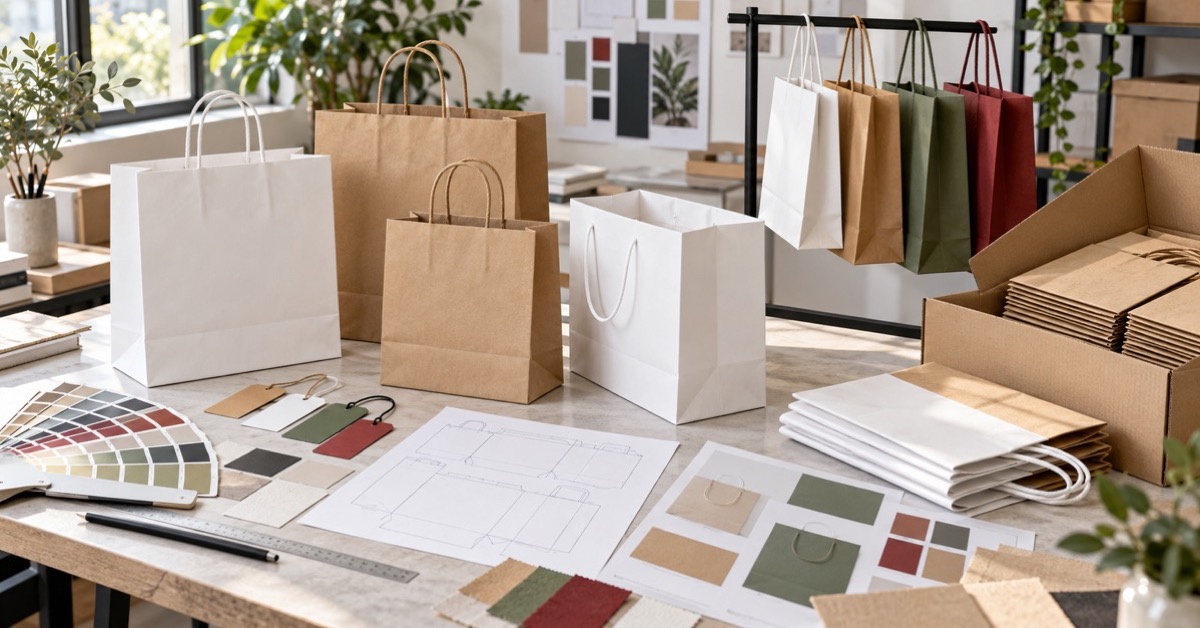
Kraft paper behaves differently from fabric or film. The board weight decides how a bag folds and stands, the handle fixing decides where the load travels, and the print sits on a surface that is absorbent, uneven and naturally coloured. Those three characteristics interact, so a change in one usually moves another.
Because they interact, a single sample cannot settle everything at once. A construction that is proven on 150 grams per square metre will behave differently on 200, and a colour approved on one board weight may not survive the change. Rounds exist to separate those questions rather than to add ceremony.
The three-round shape
Most kraft bag developments follow this shape. The middle columns are what a round log records so the next round starts from a known position.
| Round | Purpose | What may change | What is frozen |
|---|---|---|---|
| Round one | Prove the construction | Board weight, gusset, handle fixing | Nothing yet |
| Round two | Prove the print | Ink, plate, print position | Construction from round one |
| Round three | Prove production | Nothing structural | Everything, built on final material |
A round that changes something already frozen is not a development step, it is a reopening, and it should be named and priced as one.
Round one: prove the construction
The first sample answers a physical question: does this bag carry this product without deforming. The board weight, the gusset depth, the base fold and the handle fixing are all in play, and the bag does not need to look finished.
Test it loaded rather than empty, and test it as the customer will carry it. A kraft bag that holds a bottle at 200 grams may bow at 400, and the fix belongs to the gusset rather than to the board weight in most cases. PackMK records the load used, because a construction result without a load figure means nothing.
Round two: prove the print
The second sample puts ink on the board that was settled in the first round. Ink, plate and print position can all move here, and nothing else should. Kraft takes ink differently from coated stock, so a colour that looked right on a paper proof can read duller or browner on the bag.
Approve colour on a printed bag rather than on a proof sheet, and keep that printed piece. Where the mark includes fine text, check the smallest size the customer will read rather than the size on the drawing, because an uncoated surface closes small letterforms.
Round three: prove the production sample
The production sample is built with the final board, the final print and the final handle. It should introduce no new decisions. Its purpose is to confirm that the construction which worked in round one and the print which worked in round two survive together on the production line.
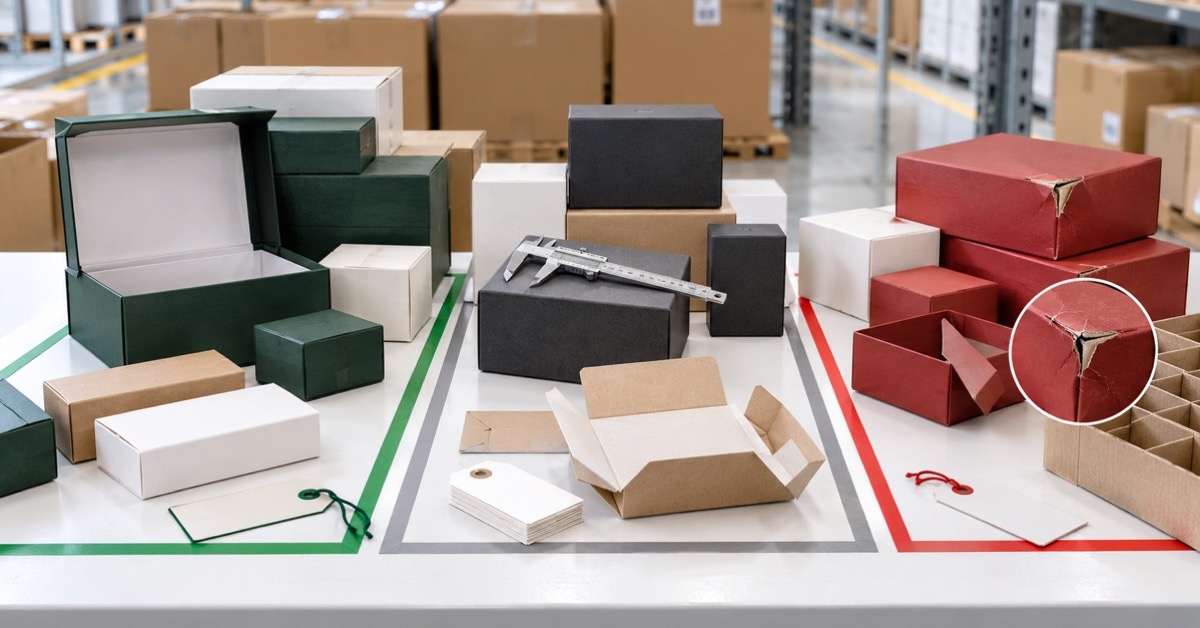
Measure this round against the round one construction and the round two print rather than against a memory of the original brief. PackMK photographs each sample at three fixed angles with a ruler in frame so three rounds can be compared side by side.
What a round report should contain
A round report is short: the round number, the date, the changes made, the parameters frozen, the load or condition tested and the photograph. Six fields, one page, one retained piece. Its value is that it moves the conversation from recollection to record.
The report also settles the next request before it is made. When a buyer asks for a heavier board in round three, the report shows that construction was frozen in round one and the request is therefore a reopening rather than a refinement.
When a fourth round is the right answer
A fourth round is justified when the structure changes, when the product changes weight, or when a market requires a different handle or certification. It is not justified when the first three rounds introduced avoidable changes, which is the more common cause of a long development.
PackMK treats a fourth round as a signal rather than a failure. If it arrives, we restate the frozen parameters and check which of them was quietly edited, because that pattern usually continues into production unless it is named.
What freezes at each round
Freezing is the point of a round. The table below is the one PackMK keeps on the drawing.
| Parameter | Freezes at | Reopens only if |
|---|---|---|
| Board weight | Round one | The product weight changes |
| Gusset and base | Round one | A new size is added |
| Handle fixing | Round one | A load test fails |
| Ink and plate | Round two | The board grade changes |
| Print position | Round two | The bag dimensions move |
A parameter that reopens without a reason from the right-hand column is a scope change, and it will move the delivery date with it.
How PackMK logs a kraft sample sequence
PackMK issues a round log with every ODM kraft paper bags sample and keeps the retained piece attached to it. The log travels with the job, so a factory booking production reads the same record the buyer approved rather than a paraphrase of it.
The log also makes a supplier change survivable. A new factory that receives three round reports, three retained samples and the final drawing can rebuild the bag without starting the development again, which is the practical value of the exercise.
Red flags in a sample sequence
Five patterns that predict a development with more rounds than it needs.
- A round two sample with a new board weight.
- A colour approved on a proof sheet rather than a bag.
- A load test described without a figure.
- A round three sample that introduces a new handle.
- Retained samples that are not kept with the drawing.
Each of these is a documentation problem rather than a manufacturing one, and each of them costs a round.
Keeping rounds from multiplying
The cheapest way to shorten a kraft development is to slow the first round down. Once the construction is genuinely settled, the print round is quick, and the production sample becomes a confirmation rather than a decision.
The second cheapest way is to write the freeze down. A factory that knows which parameters are closed will not reopen them to solve a problem, and it will tell you when a request cannot be met inside the frozen set, which is the moment a buyer most needs to hear it.
Case example: a bakery chain and its ODM kraft paper bags handle
A bakery chain developed an ODM kraft carrier for boxes of pastries. The first sample held the load but the twisted handle cut into the hand at full weight. The second sample changed the handle and, without being asked, the board weight as well.
The heavier board changed how the bag folded, and the third sample failed a fold test that the first sample had passed. PackMK restored the round one board, changed only the handle fixing to a flat paper handle with a wider base, and froze the construction in the round log. The fourth sample was built on the restored parameters and passed without further changes.
Where the paper-sourcing references come from
Paper bags carry fibre claims as well as print, so chain-of-custody certification and general quality management both sit behind an ordinary kraft specification. Buyers can consult Forest Stewardship Council certification and ISO quality management principles for additional context. These references do not certify a particular PackMK order.
Write an ODM kraft paper bags brief
A practical ODM kraft paper bags brief should name sample round, board weight, handle fixing, print position. It should also identify GSM, FSC, kraft board, Pantone wherever they affect approval, production, packing or delivery. PackMK uses those fields to organize samples, quotation assumptions and release evidence.
Keep the ODM kraft paper bags sample sequence proportionate
Three rounds suit a structural development. A brand adapting a catalogue kraft bag with its own print can settle on one or two samples, and a repeat order needs none. The sequence earns its cost when the construction or the board grade is new, because those are the parameters that interact.
Develop ODM kraft paper bags with PackMK
Send PackMK the product, the load it must carry, the board you have in mind and the print route. We will return a round plan with the parameters each sample settles, and a log you can hand to a second factory if you ever need one.
What buyers ask about ODM kraft paper bags
How many samples does a kraft bag development need?
Three is the usual shape: one for construction, one for print, one production sample. A brand adapting an existing catalogue bag with its own print can settle in one or two, and a structural change from scratch may need a fourth.
What board weight should a kraft bag use?
Between 100 and 200 grams per square metre covers most retail and food service bags. The right figure follows the load and the gusset rather than the look, which is why the first round tests the bag loaded rather than empty.
Why does a heavier board sometimes make a bag worse?
Because it changes how the bag folds and creases. A heavier board can fail a fold test that a lighter one passed, and it costs more. Where a bag bows under load, a wider gusset is usually a better answer than a heavier sheet.
Should colour be approved on a proof sheet?
No. Kraft board is absorbent and naturally coloured, so ink reads differently on the bag than on coated proof paper. Approve colour on a printed bag and keep that printed piece with the round record.
What is a round log for?
It records what each sample changed, what it froze and what was tested. Six fields on one page. Its value appears when a later request arrives, because the log shows whether the request is a refinement or a reopening.
When should the handle type be decided?
In the first round, with the construction. A handle fixing decides where the load travels, so changing it later reopens the bag even when the board and the print stay the same.
Can I claim recycled or certified fibre?
Only with supporting chain-of-custody evidence that is valid on the production date. Record the certificate reference with the order, and make sure the claim printed on the bag matches what the certificate actually covers.
Why does my development keep needing new samples?
Usually because a parameter was reopened without being named. If round two changes the board weight and round three changes the handle, the development is not converging, and the pattern tends to continue into production.
What should I keep from each round?
The report, the photograph and one retained bag. Three retained bags and three reports let a second supplier rebuild the product without a new development fee, which is the practical value of the exercise.
What should an ODM kraft paper bags brief contain?
The product and its weight, the load the bag must carry, the board weight in GSM, the gusset and base construction, the handle type, the print route and any fibre claim. PackMK plans the rounds from those fields.