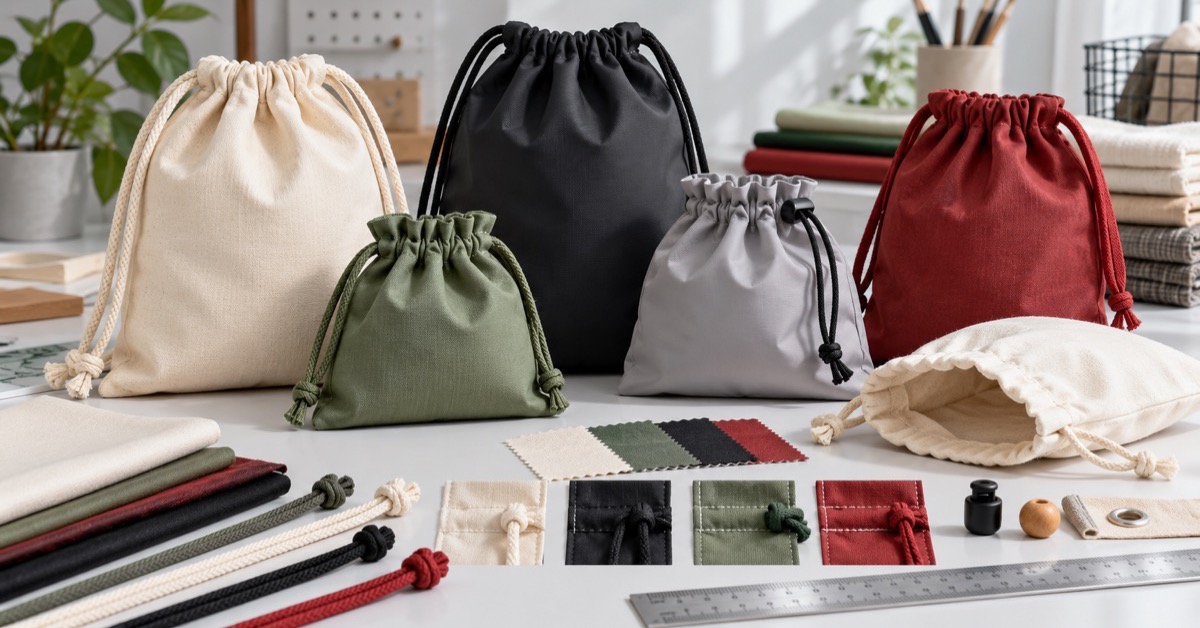


An ODM canvas bags project changes hands several times before a buyer sees a production sample. A designer thinks in proportions, a product team thinks in use and a factory thinks in panels, seams and operations. Rework begins when those three descriptions do not point to the same bag.
PackMK uses a design handoff map that follows the bag from concept to repeat order. It names the information that must survive each handoff and separates a visual preference from a production instruction, so a promising canvas design remains recognisable after it is made at scale.
Short answer: ODM canvas bags stay consistent when the handoff records five things: the use case, the base construction, the measurable dimensions, the artwork reference and the approval owner. Each team can add detail, but none should rewrite those anchors without a new version.
The handoff begins with a use sentence
A concept file often opens with a mood image. A factory needs a use sentence: who carries the bag, what it holds, how it is stored and how often it is expected to be used. That sentence determines which canvas, handle and base decisions deserve attention.
PackMK places the use sentence at the top of the brief and checks every later choice against it. A soft foldable bag and a structured retail tote may share a colour palette, but they do not share the same construction logic.
Five fields that must travel with the design
The handoff map starts with fields that are readable to design, buying and production alike.
| Field | Design language | Factory language | Owner |
|---|---|---|---|
| Use case | Daily, event or retail | Load and handling assumption | Product team |
| Base construction | Silhouette and feel | Panel, gusset and seam route | Factory engineer |
| Dimensions | Proportion and balance | Finished tolerance and reference edge | Buyer |
| Artwork | Logo hierarchy and tone | Print box, method and colour target | Brand owner |
| Approval | What looks right | What is released to run | Named approver |
PackMK returns the same five fields on the sample record, so the sample can answer the design question and the manufacturing question at once.
Translate a silhouette into panels
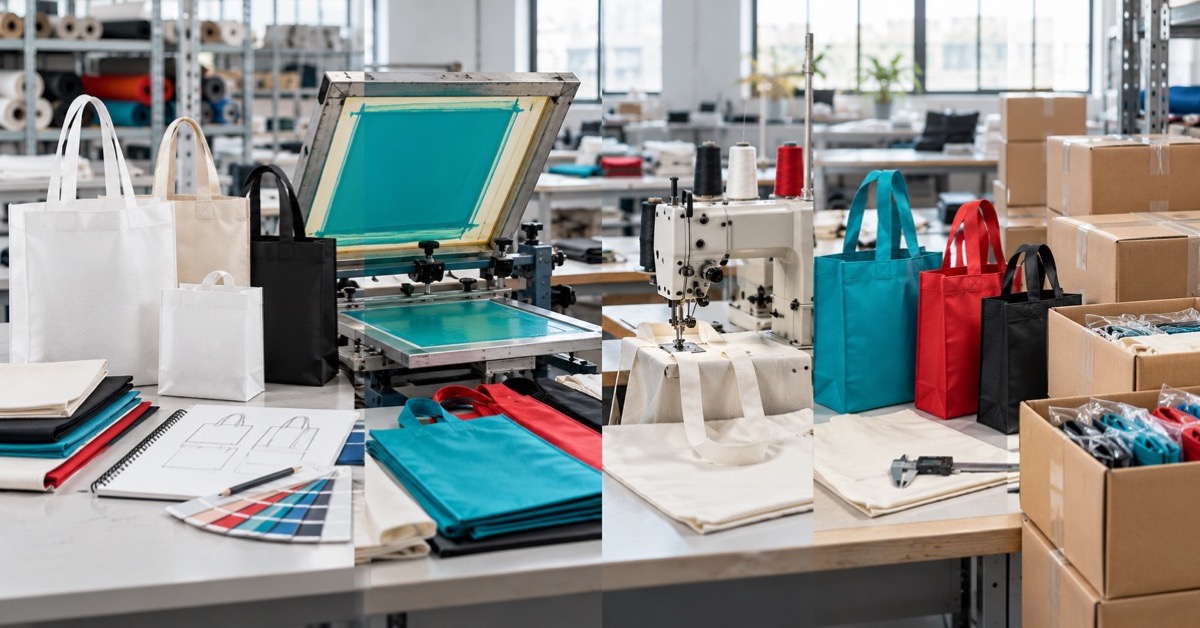
A rounded bottom, a wide gusset or a folded top edge is a visual idea until it becomes a panel drawing. The drawing should show which edges are seams, which are folds and where a handle transfers load.
Do not let the factory infer a curved or softened shape from a photograph. PackMK marks the finished reference points and retains the first cut panel, because the panel is the earliest proof that the silhouette can be produced repeatedly.
Keep canvas weight separate from hand feel
Canvas weight affects stiffness, durability and print absorption, but the same weight can feel different because of weave, finish and washing. Calling a bag heavy or soft is useful for a concept and insufficient for a purchase order.
Record the target weight or construction, the finish and the expected use. PackMK compares a filled sample with the brief, then states which part of the feel comes from fabric and which comes from the base or handle.
Make the handle a measured feature
A handle is often drawn as a line and priced as a length. In use it is a load path. Attachment distance, turn-back, stitch pattern and handle width decide whether a full canvas tote hangs comfortably or pulls the top edge out of shape.
The handoff map gives the handle its own mini drawing. PackMK records relaxed length, loaded length, attachment point and reinforcement so a later colour or size branch does not accidentally inherit a weak attachment.
Artwork notes that save a sampling round
These notes are easy to add while the design team still owns the file.
- Name the print method or the acceptable alternatives.
- Reference the print box from a seam or fold.
- State whether the logo remains fixed across sizes.
- Add the colour target on the actual canvas route.
- Identify the person who can approve a first-off.
PackMK treats a missing note as an open decision rather than filling it with a factory assumption.
Use one change per sample round
ODM projects often ask a sample to prove a new size, new fabric, new handle and new print at the same time. When the sample misses, nobody can tell which decision caused the problem, and the next round repeats the uncertainty.
PackMK groups changes into a controlled round: construction first, then performance, then artwork or finish. A round may include several small changes, but every change is listed beside the result it is meant to prove.
The sample handoff record
A sample record should let someone who missed the meeting understand why the piece was made.
| Record | What to write | What the next team can decide |
|---|---|---|
| Version | Stable name and date | Which file and drawing apply |
| Change list | One line per change | What this sample is testing |
| Test load | Product or stated weight | Whether dimensions hold in use |
| Artwork proof | File, colour and method | Whether print is released |
| Disposition | Accept, revise or hold | Whether the next gate can start |
PackMK keeps the sample and the record together, rather than allowing a physical reference to outlive its reason for existing.
Grade sizes from an anchor edge
Canvas bags are commonly widened, shortened or deepened for different products. If every dimension is scaled by percentage, the handle may move too high, the print may sit on a fold or the base may stop standing.
Choose an anchor edge, such as the top seam or side seam, and state what stays fixed from that edge. PackMK uses a graded drawing for a family of sizes and rechecks the filled shape instead of trusting proportional scaling.
Build repeatability into the ODM relationship
ODM is valuable when the factory's base development reduces time without making the buyer dependent on memory. The repeat order should refer to a drawing, approved piece and revision, not to a conversation about the bag made last season.
PackMK asks for a repeat-order pack that lists cloth, pattern, handle, print route, packing and change authority. That pack turns a successful first run into a controlled starting point for the second.
Signals that the handoff is incomplete
Pause a canvas bag project when any of these descriptions appear without a measurable follow-up.
- The bag should feel premium.
- Use the same logo size as before.
- Make the handle a bit longer.
- The colour can match the screen.
- Pack it in the usual way.
Each phrase can become a valid instruction after one question. PackMK asks that question before a new sample is cut.
Case example: a fashion retailer's three-size canvas family
A fashion retailer developed an ODM canvas bag with a rounded base and requested two smaller sizes. The first smaller sample used scaled dimensions, which pushed the logo toward the fold and made the handle feel short when the bag was filled.
PackMK rebuilt the handoff around a fixed top seam and a measured handle attachment, then tested the three sizes with representative loads. The family kept one visual language while each size gained a production instruction that could be repeated.
References behind the design handoff map
A controlled handoff depends on clear ownership and recorded changes. Textile safety and material claims also need a named reference rather than a general description. Buyers can consult ISO quality management principles and OEKO-TEX textile safety standards for additional context. These references do not certify a particular PackMK order.
Write an ODM canvas bags brief
A practical ODM canvas bags brief should name use case, base construction, handle attachment, print box. It should also identify ODM, canvas gsm, Pantone, first-off sample wherever they affect approval, production, packing or delivery. PackMK uses those fields to organize samples, quotation assumptions and release evidence.
Keep the ODM canvas bags map proportionate
A single canvas bag with one size can use a one-page drawing and sample note. The full map earns its cost when a design moves between teams, adds sizes, changes material or needs a repeat order months after the first run.
Move an ODM canvas bags concept into production with PackMK
Send PackMK the concept, use sentence, target load, artwork and expected sizes. We will return a handoff map that separates visual intent from measurable production instructions and shows what each sample must prove.
Common questions about ODM canvas bags
What does ODM mean for canvas bags?
The factory has a developed base construction that can be adapted for your use, dimensions, material, finish or artwork. Ask which parts are shared and which parts become a controlled version for your range.
How should I describe a canvas bag to a factory?
Start with the use, load, storage and expected life, then add fabric construction, finished dimensions, base, handles, artwork, packing and delivery. A mood image can support the brief but cannot replace those fields.
Is canvas gsm enough to specify the fabric?
No. Record construction, finish and target gsm or caliper, then check a filled sample. Hand feel also comes from weave, washing, base and handle, so one number cannot describe the entire performance.
Where should a logo sit on a canvas tote?
Reference it from a seam or fold and check it on a filled bag. The empty panel centre can move when the base opens or the handles pull the top edge.
How do I size a canvas bag family?
Choose an anchor edge and state which dimensions remain fixed. Recheck the filled shape, handle comfort and print box for every size instead of scaling every measurement by percentage.
Should every sample change one thing?
A sample can prove several small related changes, but list each change and its expected result. Avoid changing construction, fabric, handle and artwork at once because a failed result becomes difficult to diagnose.
How should handles be tested?
Measure relaxed and loaded length, inspect the attachment and reinforcement, and use the intended load. A neat handle on an empty bag does not prove comfort or strength.
What should I retain after approval?
Keep the approved piece, drawing, artwork version, test load and disposition. Those references make a repeat order comparable without relying on memory.
Can an ODM factory reuse the sample for a new colour?
Yes, when the cloth, pattern, handle and print box remain fixed. Approve the new colour on the actual canvas route and record it as a new version.
What should an ODM canvas bags brief contain?
Include the use case, load, fabric, dimensions, base, handle, print method, print box, colour target, sample owner and expected versions. PackMK uses those fields to build the handoff map.