

Factory Direct Advertising Bags: Control the Critical Path
Direct answer: Factory direct advertising bags reach the required date only when artwork, material, print setup, sewing, inspection, packing and dispatch are connected by dated dependencies. Freeze each release input before its dependent operation and protect the bottleneck with a named fallback.
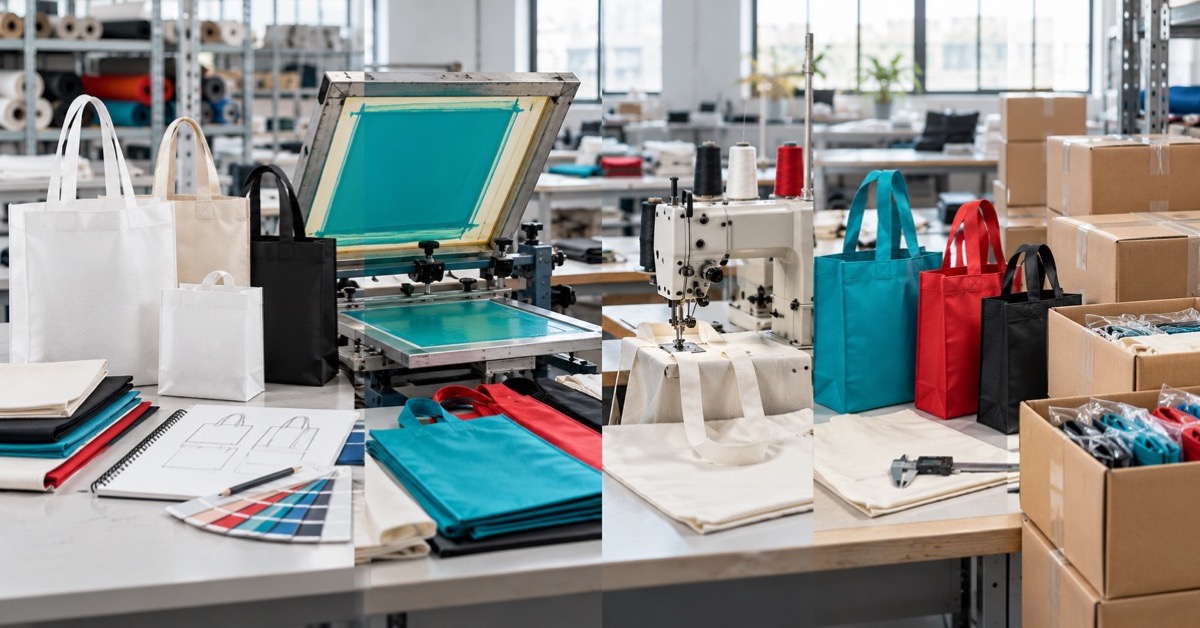
With factory direct advertising bags, you speak to the maker without an extra trading layer. The calendar still has six stubborn parts: files the printer can use, material on hand, a signed proof, a line slot, an inspection decision and a freight handoff that fits the campaign date.
We write the in-hands date at the right edge of the page, then work left. Factory hours go above the line; time spent waiting for the buyer goes below it. If approval and printing land on the same square, the schedule needs another look.
Plot the route from sign-off to truck
Put each release on one line with its owner and output date. Work downstream may start only after the input it consumes is signed off; unrelated preparation can continue alongside it.
| Gate | Required input | Released output | Typical dependency |
|---|---|---|---|
| Artwork | Correct files and data | Print-ready proof | Buyer approval |
| Material | Construction and colour basis | Allocated material | Availability or dye route |
| Print setup | Approved proof and substrate | First printed piece | Screen, plate or digital setup |
| Assembly | Printed panels and construction | Finished bags | Line slot |
| Inspection and pack | Criteria and carton plan | Released cartons | Disposition owner |
| Dispatch | Released goods and route | Handoff record | Booking and documents |
PackMK does not add a date until both the dependency and the person releasing it are visible.
Lock the file before the press is set
Lock the artwork before final print setup. The handoff names the file and revision, finished dimensions, colour references, print position, barcode or variable fields, plus the person allowed to say yes.
There are really two approvals here. One says the words and logo are correct. The other says their scale and position work on this substrate with this print route. PackMK records both, because one cannot stand in for the other.
Date the sample from the handoff, not the inquiry
Day one is the day the sample maker can begin. If size, fabric, colour or the question behind the sample is open, an inquiry sent last Monday is not a meaningful start date.
PackMK writes down when that usable handoff occurred and when the sample is due back. A pause for buyer input appears as a pause; it is not quietly added to workshop time.
Put material confirmation beside artwork
Material confirmation should run beside artwork where possible but must finish before the dependent print and construction approvals. An equivalent-looking substrate can absorb ink, hold a seam or recover from packing differently.
PackMK identifies the approved material basis, colour route and any permitted substitute. If a substitute is proposed, the timeline reopens only the affected proof and process gates rather than restarting unrelated decisions.
Separate working time from approval waiting time
Separate factory working time from buyer waiting time in every milestone. This shows whether the current bottleneck is capacity, material, proof production, internal buyer review or shipment booking.
| Milestone | Factory work clock | Buyer decision clock | Escalation trigger |
|---|---|---|---|
| Digital proof | Prepare print layout | Confirm content and position | Unclear or conflicting comments |
| Physical sample | Make agreed construction | Test and approve purpose | New variable added |
| First printed piece | Set and print | Release colour and position | Owner unavailable |
| Pre-shipment inspection | Present finished lot | Accept, hold or rework | Criteria not agreed |
| Dispatch | Pack and hand over | Confirm route or documents | Booking cutoff at risk |
PackMK reports both clocks so the recovery plan addresses the real constraint.
Find the date that cannot slide
One date usually has less give than the rest. It might be the fabric truck, a colour setup shared with another order, a sewing slot, drying time, the inspection visit or Wednesday's last consolidation.
A general claim about monthly capacity cannot reserve that date. Ask which slot carries this job and what would cause it to be released. PackMK puts those conditions beside the milestone.
Stop after the first live piece
Pause after the first live piece long enough to compare it with the signed proof and sample. Material, print position, colour route and construction are now together for the first time.
The note from that check contains a time, version and disposition: continue, correct or hold. A chat photograph without those details is useful for discussion, but it is not the production release.
Book the inspection while production is still running
Book inspection before the last bag comes off the line. By then the lot definition, defect classes, sampling basis and decision maker should already be settled. Rules written only after a problem appears are hard for either side to apply fairly.
PackMK sets out what passes, what needs correction and who may accept a recorded variance. We position the visit before packing and the freight cutoff, while there is still time to act on the result.
Build a fallback for one named disruption
A useful fallback addresses a named disruption without changing unapproved product requirements. Material shortage, equipment downtime, proof rejection, rework and missed booking need different choices and lead-time consequences.
PackMK records the earliest warning signal, responsible owner, available alternative and reapproval needed. A substitute material or process is never treated as an automatic schedule fix.
A promised date is still loose when
Call the date provisional while one of these five statements is true.
- Lead time starts before input completeness is defined.
- Artwork approval has no named owner or deadline.
- Capacity is stated without a dated project slot.
- Inspection is planned after the dispatch booking.
- The fallback changes material or process without a proof route.
PackMK gives the missing decision an owner and a calendar box. Only then does it move from assumption to schedule.
A print run finished on time and the campaign still missed its date
Printing ended Tuesday, exactly as booked. The bags nevertheless missed Wednesday's consolidation because final carton marks reached the packers after they had begun sorting boxes. By the time the identities matched, the truck had closed.
The repair is mundane: approve the carton mark before packing starts and put inspection ahead of the booking cutoff. Shaving an hour from print setup would not have changed this outcome.
References for process ownership and delivery terms
“Incoterms rules describe obligations, risk and costs.”
Inside the workshop, this schedule tracks process ownership. At dispatch, it switches to the parties' agreed delivery responsibilities. Read the ISO process overview for management context and ICC's Incoterms overview for the handoff boundary. Neither link is evidence that a PackMK order holds a certification.
Write a factory direct advertising bags schedule brief
A practical factory direct advertising bags brief should name artwork freeze, material confirmation, first-piece approval, dispatch cutoff. It should also identify print setup, production slot, inspection, Incoterms wherever they affect approval, production, packing or delivery. PackMK uses those fields to organize samples, quotation assumptions and release evidence.
Keep the factory direct advertising bags timeline realistic
For a true repeat with frozen inputs, a short confirmation route may be enough. Changed artwork? New fabric? Different quantity or port? Put the affected gates back. A few extra days are sensible only when the team can say what those days protect.
Schedule factory direct advertising bags with PackMK
Give PackMK the in-hands date and destination first, then the artwork status, construction, quantity, proof needs and delivery term. We will return the dependency chain, named owners, likely bottleneck and fallback that sit behind the proposed production date.
- Review PackMK packaging formats
- See PackMK OEM and ODM services
- Read about PackMK
- Send PackMK a packaging brief
Common questions about factory direct advertising bags
When does the lead-time clock really start?
Use a separate start for each stage: the moment its required inputs are complete and accepted. Keep the artwork, material, sample, production and freight dates apart.
Which files does the print team need?
Send the format requested by that printer, with fonts or outlines, linked images, finished dimensions, colour references, variable data and an unmistakable revision name.
Who gets the final say on the proof?
Choose one authorized person who can reconcile brand, product and data comments. One consolidated decision avoids another round caused by conflicting emails.
How do I find this order's bottleneck?
Look for the operation with the least calendar flexibility: perhaps incoming material, setup, sewing, drying, inspection or the freight cutoff. Check it against the dated project slot.
May artwork and material move at the same time?
They may, provided neither awaits a choice from the other. Release both before any printed or constructed sample that combines them.
What does the first piece prove?
It shows the live material, colour route, print position and construction together. Date the decision and link it to the exact approved version.
How early should inspection be arranged?
Arrange it while there is room for a hold, review or repair before the freight cutoff. Set the criteria and the person making the disposition at the same time.
What is a valid schedule fallback?
A valid fallback names one disruption, one alternative, the time consequence and any reapproval. It cannot silently change material, process or quality requirements.
Does factory direct mean the lowest lead time?
No. It changes the communication route but material, production, approval, inspection and logistics dependencies still determine the achievable date.
What belongs in the scheduling brief?
List the in-hands date, destination, bag construction, material, artwork status, quantity, proof, approvers, inspection, packing, delivery term and fallback. PackMK turns that list into the critical path.