


A bulk advertising bags order has three customers inside one company, and they want different things. Marketing wants the artwork to be right on the day. Procurement wants the price to hold. Production wants a specification that stops moving. When those three arrive at the factory separately, the quotation is built on three assumptions and the run inherits all of them.
PackMK quotes advertising bag runs every month, and the difficult ones are rarely difficult because of the bag. They are difficult because a campaign date does not move and a print window does not stretch. This is how we collect the three sets of inputs in one place, and what the campaign loses when one of them arrives late.
Short answer: Bulk advertising bags run cleanly when three artifacts exist before the order is booked: an approved artwork file from marketing, a frozen price basis from procurement, and a fixed specification from production. PackMK collects all three, returns a single set of assumptions, and asks each side to confirm the same document.
Why a campaign run has three customers
Marketing owns how the bag looks and when it must be in hand. Procurement owns what the company pays and how the payment is structured. Production or operations owns what gets made and how it is packed. Each is accountable for something real, and none of them can sign off on the other two.
A factory that receives one instruction loses the argument. The artwork arrives, the price is defended, and the specification is implied. Six weeks later someone discovers that the implied specification used a lighter fabric than the one in the price.
What each side must supply
Three inputs, one document. The right-hand column is what regularly goes missing when a campaign is planned by email.
| Function | Input | Needed by | What breaks without it |
|---|---|---|---|
| Marketing | Approved artwork and colour reference | Before plate or screen setup | Reprint, or a run that misses the launch |
| Procurement | Frozen price basis and payment terms | Before the order is confirmed | A change fee inside the same run |
| Production | Fixed specification and packing plan | Before material is ordered | Substitution and a short shipment |
The three inputs arrive in one document at PackMK. Each side signs the same page rather than attaching its own.
The artwork marketing actually has to approve
Approving artwork is not the same as liking it. The approval that survives a run names the file version, the colour reference, the print method and the panel where each element sits. A mark that arrives as a logo file with no version number will be printed exactly as the factory interprets it.
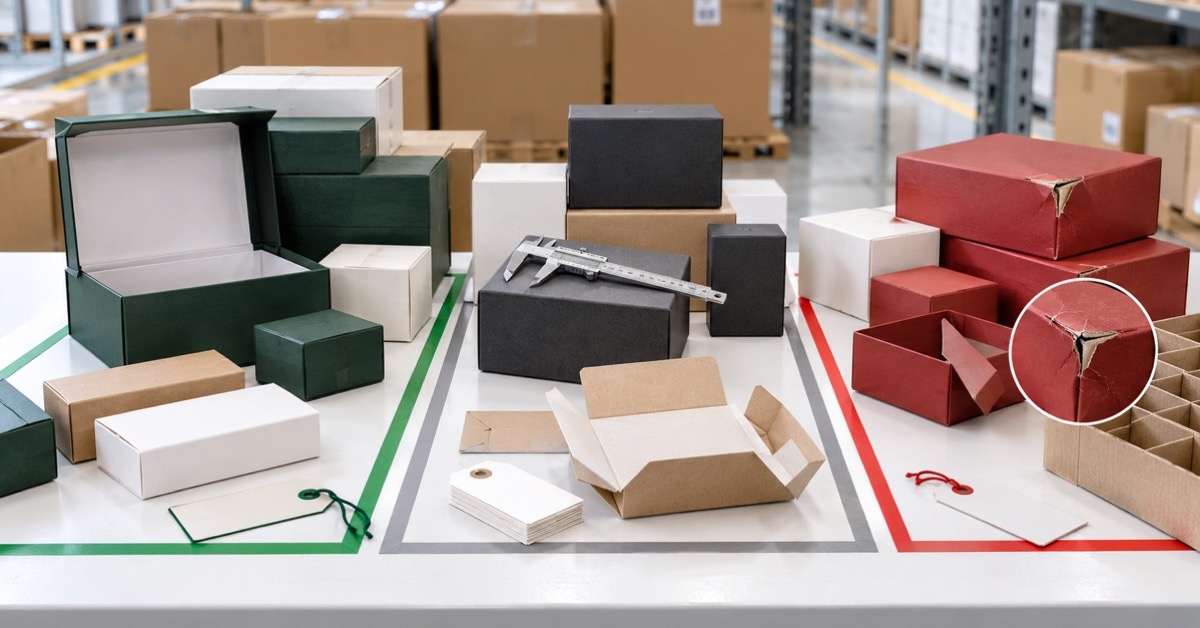
Where the artwork includes a partner or sponsor mark, the approval should also name who owns each element, because joint campaigns are where a late change is most likely. PackMK returns a first-off before the bulk run so the approved file has a physical counterpart.
The price basis procurement should freeze
A price means nothing without its basis. The basis names the fabric weight, the print method and the quantity band the price applies to, along with the delivery term. A quotation supplied without those four items cannot be compared with a second quotation, and it cannot be defended when a specification moves.
Freezing the basis does not mean refusing to negotiate. It means the negotiation happens on a stated specification rather than on a headline number. PackMK puts the basis on the quotation itself so procurement can approve the number and the assumption in one action.
The specification production should own
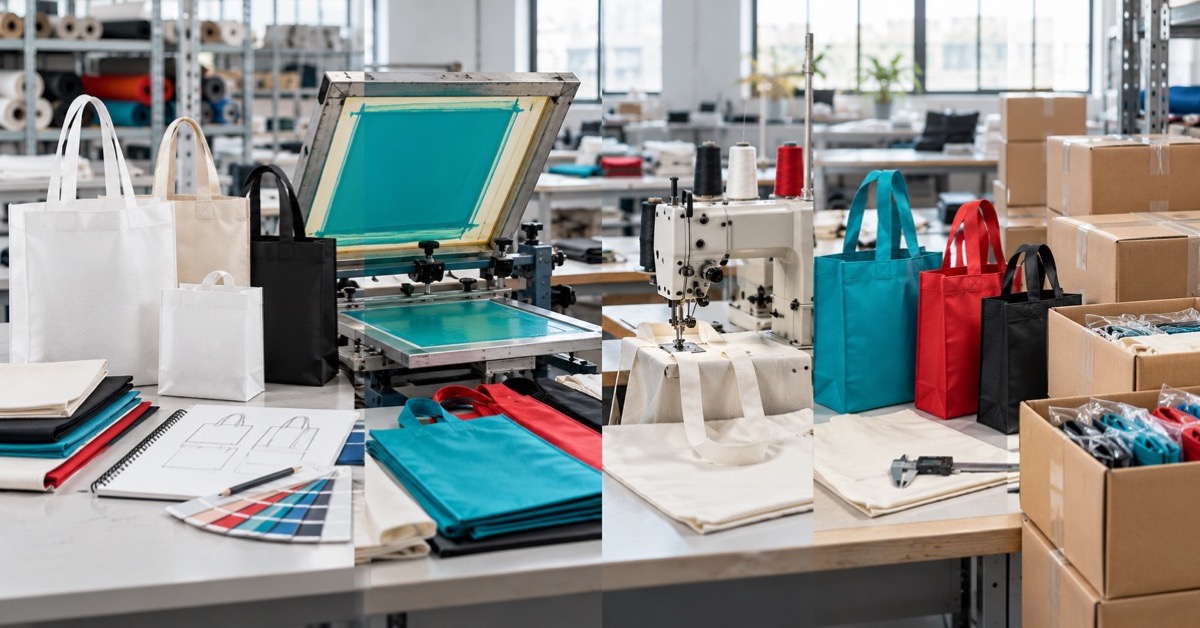
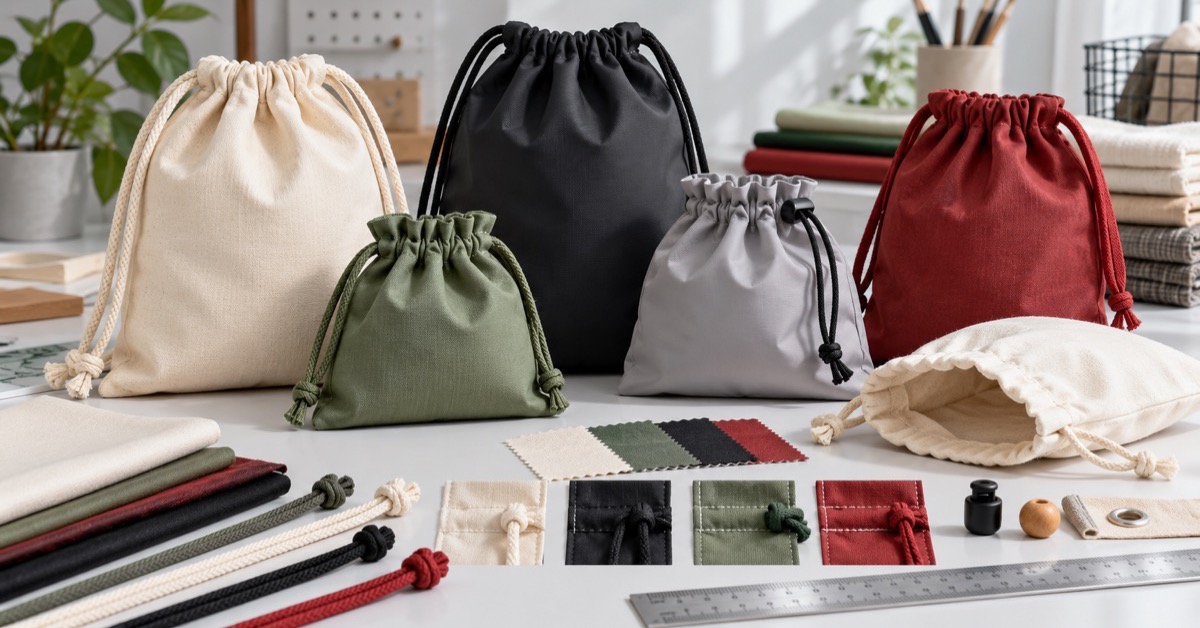
Production owns the parts of the bag that decide whether the campaign arrives in one piece: the fabric, the handle or cord, the finished size and the packing. Those are the four fields that change delivery rather than appearance, and they are the four a factory will adjust when a date is tight.
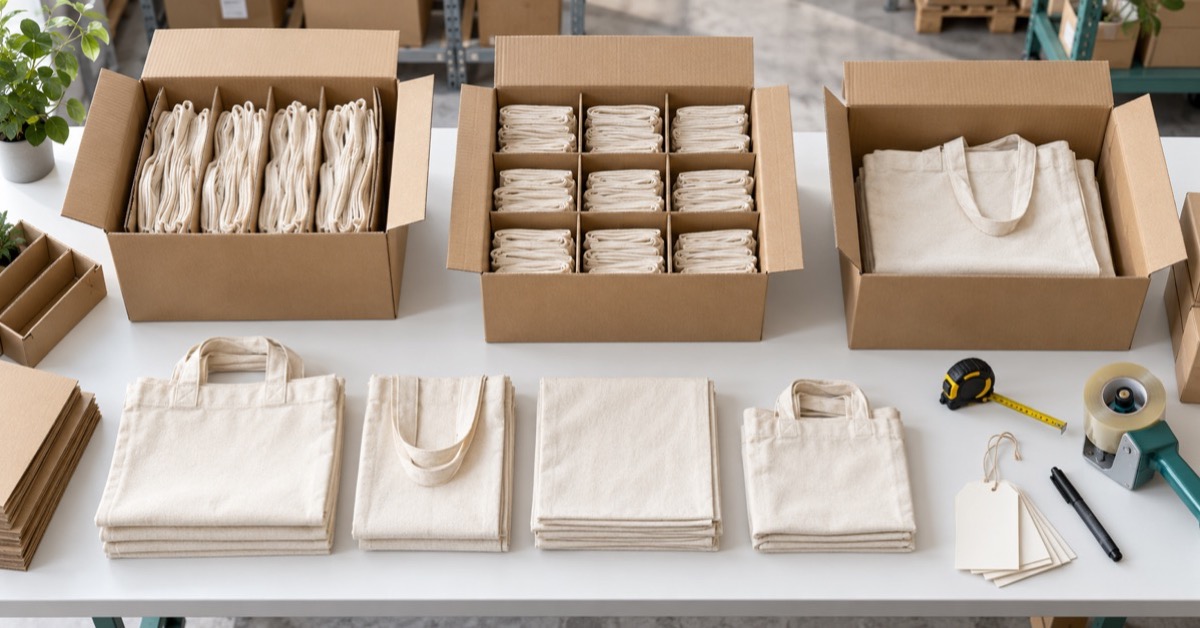
Packing belongs here as well. The carton count per size decides how many pallets leave and how the shipment is booked. A bulk advertising bags order that states the count at confirmation avoids a freight surprise that arrives after the print is already dry.
Where the three requests collide
Collisions follow a pattern, and most of them are predictable. Marketing asks for a colour that needs an extra screen. Procurement asks for the price of the previous run, which used one screen fewer. Production asks for a fabric weight that is available in three weeks rather than two.
None of the three requests is unreasonable on its own. The collision only becomes a problem when it is discovered late, so PackMK puts the three requests next to each other before the run rather than during it, and shows which one is driving the cost.
The three most common collisions
Each row has a cheap resolution if it is raised at confirmation and an expensive one if it is raised after setup.
| Collision | Typical shape | Cheap resolution |
|---|---|---|
| Colour against screen count | A gradient in a sponsor mark | Approve a flat colour for the small mark |
| Price against quantity | Last run's price at a lower quantity | Move the quantity up or accept a new basis |
| Date against fabric | Two weeks quoted for a three-week cloth | Switch weight or move the delivery date |
PackMK names the trade in writing rather than choosing silently, because the three sides weight the trade differently.
What PackMK returns before the run
Before a bulk advertising bags run is booked, PackMK returns one page: the artwork version, the price basis, the specification and the packing count, each with the name of the person who confirmed it. The page is short enough to read in a meeting and specific enough to hold a supplier to.
The same page becomes the reference at the end of the run. When the bags arrive, the count, the carton marks and the approved first-off are all checked against it rather than against memory.
Red flags when three departments order one run
Five signals that a campaign run is being planned in parallel rather than together.
- Artwork approved verbally on a screen share.
- A price quoted without naming a quantity band.
- A fabric description that names a colour rather than a weight.
- A carton count described as flexible.
- A delivery date agreed with nobody responsible for the print window.
Each of these can be closed with one short email, and each of them becomes a change fee once the screens are made.
Use a shared vocabulary across the three sides
Three words carry most of the risk on a campaign bag: version, basis and freeze. A version is a named file, a basis is the assumption behind a price, and a freeze is the moment a parameter stops moving. When all three sides use those words, a late request is understood as a change rather than as a detail.
The habit also shortens the next campaign. A run that ends with a frozen specification and an approved first-off gives the following year's brief a starting point rather than a blank page.
Case example: a bank campaign with two sponsor marks
A bank ordered 40,000 advertising bags for a summer campaign that carried its own mark and a charity partner's mark. Marketing approved the layout, procurement approved a price, and nobody wrote down which of the two marks could be changed without reopening the artwork.
Three days before printing, the charity changed its tagline. The factory treated the change as a new artwork version and priced a new screen. PackMK had retained the approved first-off and the file version, so the work was limited to one panel, and the campaign still shipped on the original date. The bank now names the owner of each element in the brief.
Where the campaign references come from
A campaign bag crosses a commercial boundary before it crosses a border, so the delivery term and the quality system behind the factory both matter. Buyers can consult ICC Incoterms rules overview and ISO quality management principles for additional context. These references do not certify a particular PackMK order.
Write a bulk advertising bags brief
A practical bulk advertising bags brief should name campaign date, artwork version, price basis, specification. It should also identify Incoterms 2020, ISO 9001, pre-production sample, carton mark wherever they affect approval, production, packing or delivery. PackMK uses those fields to organize samples, quotation assumptions and release evidence.
Keep the three-way brief proportionate
Not every advertising bag run needs three signatories. A single-market campaign with one mark and a short run can be confirmed by one person. The three-way brief earns its place when a campaign has a fixed date, more than one brand element, or a quantity large enough that a reprint would be visible.
Plan a bulk advertising bags campaign with PackMK
Send PackMK the campaign date, the artwork and the quantity, and tell us who owns the price basis. We will return one confirmation page with all three inputs on it, and flag any collision before the screens are cut.
Frequent questions on bulk advertising bags
What counts as bulk for advertising bags?
Most factories treat 5,000 pieces as the point where a rotary screen becomes economical, and pricing flattens again above roughly 20,000. The practical answer depends on the artwork, because a multi-colour mark raises the quantity at which a large run pays.
Who should approve the artwork?
The person accountable for how the campaign looks, and only that person. A joint approval from two departments usually means nobody owns the file version, which is the item a factory needs when a change is requested after setup.
How long before a campaign should I order?
Allow six to eight weeks: one for specification and price, one for artwork approval and first-off, two to four for production, and the rest for transport. Campaigns that compress this usually compress the proofing step, which is the wrong place to save.
Can the price be held from a previous run?
Only if the basis is unchanged. A previous price carries a fabric weight, a print method and a quantity band. If any of the three moves, the price moves, and a factory that holds the old number is usually planning to adjust the specification instead.
What should the specification fix?
Fabric weight in grams per square metre, handle or cord construction, finished dimensions and packing count. Those four drive delivery rather than appearance, which is why they belong to production rather than to marketing.
How do I handle a sponsor or partner mark?
Name the owner of each element in the artwork file and record who may change what. A partner mark that changes late should be isolated to one panel so the rest of the artwork does not have to be re-approved.
Do I need a first-off sample?
For a campaign with a fixed date, yes. A first-off is one printed piece from the production setup, signed and dated. It is the only baseline that lets a colour discussion end, and it costs a fraction of a reprint.
What if the campaign date moves?
Tell the factory before material is ordered rather than after. Moving a date inside the same month usually costs nothing. Moving it after fabric is cut converts a schedule change into a material problem, and the fee reflects that.
Should the bags be packed by size?
Yes, wherever the campaign uses more than one size. Separate cartons per size with the count marked on the outside let a regional team distribute stock without opening every box on a warehouse floor.
What should a bulk advertising bags brief contain?
The campaign date, the quantity, the artwork version, the price basis, the fabric and handle specification, and the carton count per size. PackMK prices those fields directly rather than adding a contingency for each missing one.